


The short answer
No travel eSIM sells a Jerusalem plan of its own: you buy the Israel plan and it works in the capital as it does on the coast. We priced the six brands that get most of the traffic on the same day, for a short stay, a fortnight that adds Tel Aviv and the Dead Sea, and a month, then looked at what your phone has to do between the train station, the tram and the lanes of the Old City.
Unlimited data at full speed for 2 weeks at $24.99 or 30 days at $35.99, nothing renews. Airalo asks $48 for 15 days and $69 for the month.
10 GB for 30 days at $11.50, 20 GB at $16.50, and 3 days of unlimited at $12.50, level with Holafly. Its Annatel+ plans add an Israeli +972 number.
20 GB at full speed for 7 days at $19, then 2 Mbps. 30 GB at full speed for 15 days at $34, then 2 Mbps, on Hot Mobile and Pelephone. 60 GB for the month at $49.
Days, not gigabytes, no daily cap stated for your own phone, on Partner, Pelephone and Hot Mobile. $27.50 for a week.
Prices read on 25 October 2026: Airalo, Holafly, Saily, Nomad, Ubigi on their own sites or listings, Ringo Light from its catalogue. All in US dollars unless stated. Treat every number as a snapshot.
See the full price index for every country.
The prices, charted
US dollars, 25 October 2026. The rivals sell 15 days, Ringo Light 2 weeks. Ubigi's 15 days is 30 GB at full speed, then 2 Mbps. Nomad sells no unlimited plan for Israel.
The 30-day plan at each brand. Ringo Light is unlimited data at full speed. Ubigi's month is 60 GB at full speed, then 2 Mbps.
Holafly sells no buckets. Ringo Light sells no bucket either: its 2 weeks is unlimited, and lasts 2 weeks, not 30 days.

Side by side
Swipe to compare →
Get Ringo Light for Jerusalem, from $24.99.
Installed once, next to your own SIM. Your eSIM arrives by email in seconds.

- 2 weeks $24.99
- 30 days $35.99
We sell data eSIMs for now to fund the full Ringo service. Ringo is self funded. Every plan bought here pays for the build of one plan that works everywhere.
Want to keep your own number abroad?
That is the full Ringo service: one plan that works everywhere, with your own number included.
It is a separate product from Ringo Light and it is still being built, so it is not on sale yet. Join the waitlist to hear when it opens.
What to see in Jerusalem, and what your phone does for you there
Six places for a first visit, from the walls of the Old City to the hills above Mount Herzl. Most of the walled city is stone lanes and steps, so you will walk, with a map and the tram doing the rest. Check current travel advice before you book.
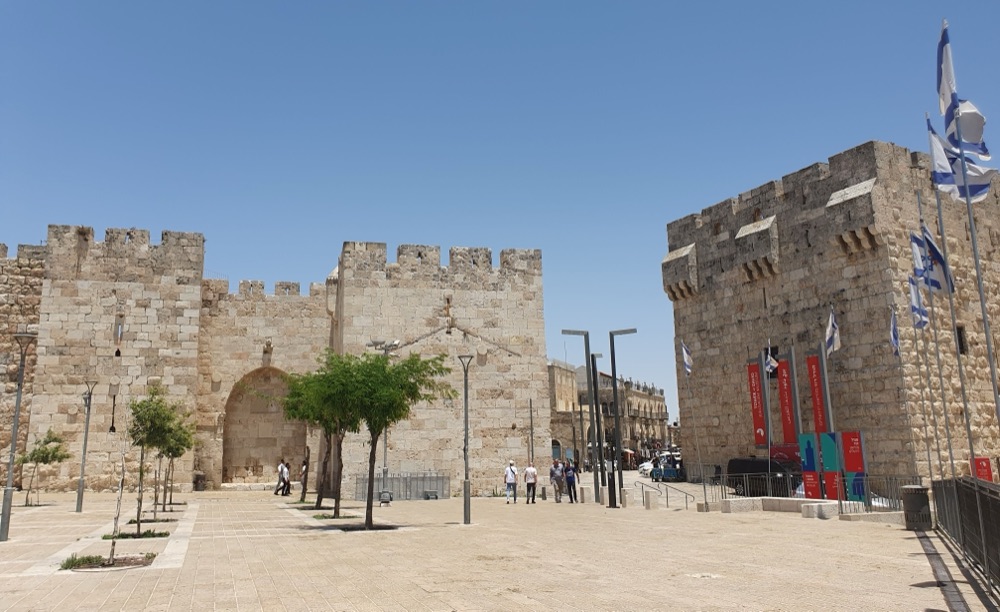
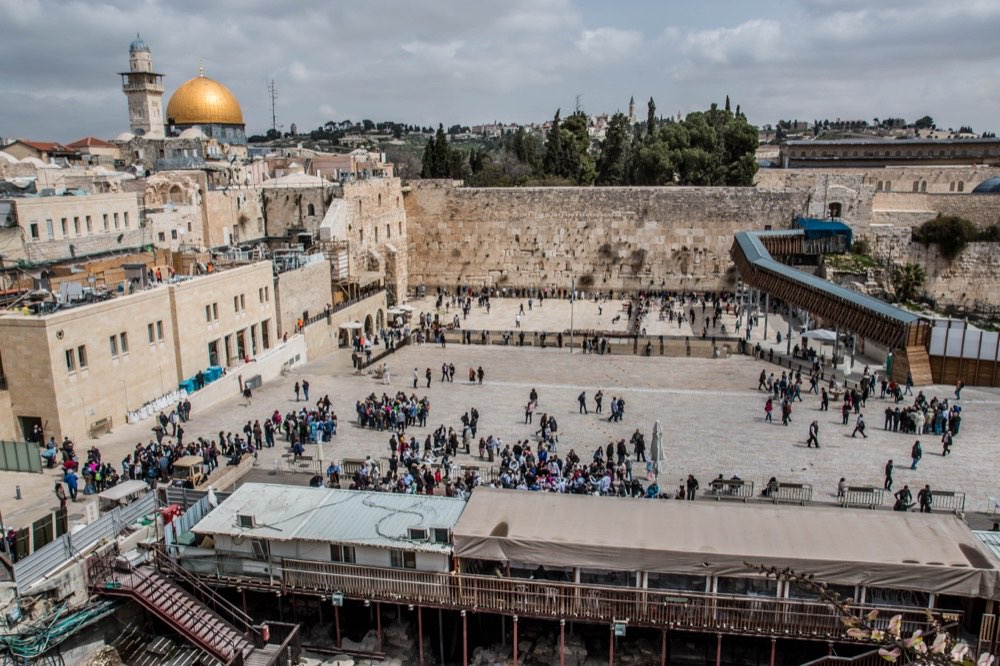
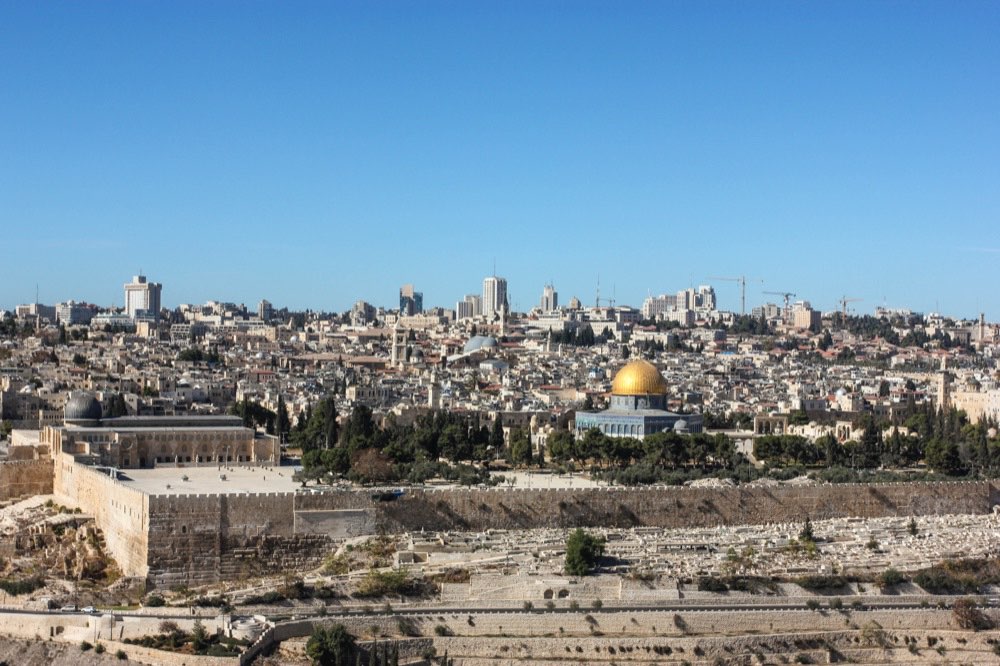
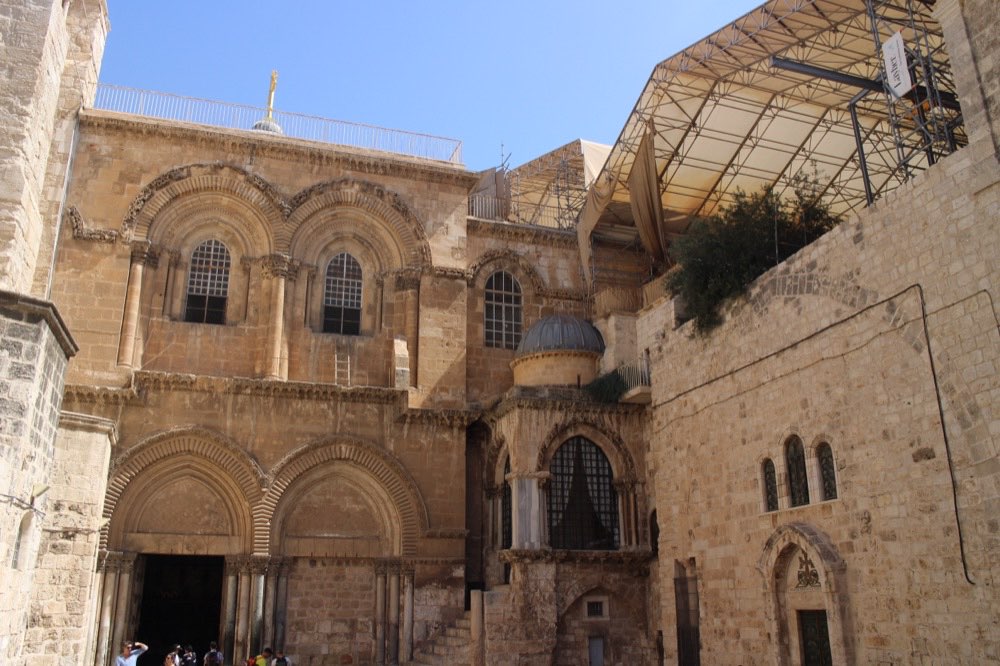

From Ben Gurion to Jerusalem, online the whole way
Most visitors fly into Ben Gurion, TLV, which sits between Tel Aviv and Jerusalem. Install your eSIM at home on Wi-Fi, then switch it on once you land. The data should connect while you queue at passport control, so you can order a ride or open a map before you reach the arrivals hall.
The quickest way up is the high-speed train from the airport to Jerusalem Yitzhak Navon station, which sits deep underground by the Central Bus Station. Journeys take roughly half an hour, but check the current timetable and fares on the Israel Railways site before you fly, as services stop for Shabbat. A shared van or a taxi is the other option, and it can be the easier one with a heavy suitcase, since the station is a walk from the centre.
The light rail, Rav-Kav and getting about on foot
Jerusalem has one light rail line, which crosses the city from Mount Herzl in the west to Neve Yaakov in the north, calling near the Central Bus Station, Mahane Yehuda market and the stops closest to Jaffa Gate. Buses fill in the rest. You pay with a Rav-Kav card or through a payment option in an operator app, and rules and fares change, so check what applies on the day you travel.
A travel eSIM makes the tram easier than a paper map does, because Moovit and the operators show live arrivals. Inside the Old City you will walk, and a taxi cannot reach most of it anyway. Keep data on for the ride home, as the stops outside the walls are where you will want a map most.
When Shabbat stops the trams and trains
Jerusalem keeps Shabbat more strictly than Tel Aviv. From Friday afternoon until Saturday evening, the light rail and most buses do not run, and neither do the trains to the airport. Many shops, and the places that sell SIM cards, close early on Friday and stay shut until Saturday night. Holidays can stop things for a whole day as well, so check the Jewish calendar when you pick your dates.
Taxis and ride apps carry on, though fares are higher and cars are fewer. If you land late on Friday, you cannot count on a counter being open, so set your eSIM up before you leave home and plan your airport trip around the timetable rather than around luck.
Signal in the Old City lanes, and why a map app matters
Jerusalem is well covered by the main Israeli networks, and the travel eSIMs in this comparison ride Partner, Pelephone, Hot Mobile or Cellcom. Out in the modern city, around Mahane Yehuda and the museums, 4G and 5G are normally strong. We have not tested each network lane by lane, so check coverage maps if a steady video call matters.
The Old City is different. Stone walls, covered markets and stacked alleys can bounce a GPS fix by a few streets, so your blue dot may drift. Save an offline map of the walled city before you go in, drop pins at your hotel and at the gate you came through, and keep data on for a live map when the lanes fork. If you plan to head into the West Bank, check current travel advice and your plan terms before you book.
Dress and photo etiquette at the holy sites
The Western Wall, the Church of the Holy Sepulchre and the other holy places expect modest dress: covered shoulders and knees for everyone, and a scarf in your bag is the easiest fix. Queues move more slowly than the map suggests, so allow time for each stop rather than packing in the whole walled city in a morning.
Photography is allowed in much of the Old City, but people are praying, so keep the flash off and ask before you frame a stranger. At the Western Wall, the custom is not to take photos on Shabbat and holidays. Some sites have set hours and rules for visitors, so check opening times and any current restrictions before you head out.
Which plan fits a Jerusalem trip
A short stay of two or three nights: Airalo and Holafly both sell 3 days of unlimited data at $12.50. Ringo Light has no 3-day plan, so for a weekend one of those is the better buy.
A week: Airalo asks $26.50 for 7 days, Saily $26.99 and Holafly $27.50, while Ringo Light has no 7-day plan. Its 2 weeks of unlimited data costs $24.99, so you pay less than each of those three and keep a second week. Ubigi sells 7 days at $19, with 20 GB at full speed and then 2 Mbps, which is below our 2 weeks.
Two weeks or a month: Ringo Light at $24.99 for 2 weeks or $35.99 for 30 days. Both cover all of Israel, so nothing changes when you ride to the Dead Sea or take the train down to Tel Aviv. Check current travel advice before you book.
What Ringo Light is
Ringo Light is our own data eSIM. For Israel it sells two trips, each with unlimited data at full speed for its length: 2 weeks at $24.99 and 30 days at $35.99. Nothing renews. The eSIM arrives by email within seconds and installs with one scan, no app needed.
You can buy it on the card further up this page, after the side-by-side table. If you only want a set amount of data, Airalo, Saily and Ubigi each sell a 10 GB plan for less than our 2 weeks, and the charts above show the figures.
Pick by trip
Airalo or Holafly unlimited, 3 days, $12.50.
Ringo Light unlimited, 2 weeks, $24.99.
Ringo Light unlimited, 2 weeks, with the Old City map saved offline before you go.
Ringo Light unlimited, 30 days, $35.99.
Airalo 10 GB for 30 days at $11.50.
Frequently asked questions
How we compared, and our sources
Airalo, Holafly, Saily, Nomad, Ubigi, Ringo Light
We priced Airalo, Holafly, Saily, Nomad, Ubigi and Ringo Light for Jerusalem on 25 October 2026, all on the same day, in US dollars. Each rival's price comes from its own website where it showed dollars, otherwise from an esimdb.com listing, and every source and its date is listed below. Ringo Light's prices come from the catalogue our checkout charges.
We compare the trips people actually book: a week, two weeks and a month of unlimited data, and a 10 GB bucket. We read each brand's fair use and speed rules and quote them as the brands state them. We did not run speed tests, so this page makes no speed claims for any brand.
Ringo Light is our own product. We put it in the table on the same terms as everyone else, and where a rival is the better buy the page says so.
Left out: Maya Mobile. We could not read its own prices for this country on the day, so it stays out rather than being guessed.
- Airalo: www.airalo.com/israel-esim?currency=USD, unlimited in dollars on the site, 25 October 2026; buckets from esimdb.com/israel/airalo, listing dated 5 October 2026
- Holafly: esim.holafly.com/esim-israel/, dollar prices and networks on its own site, 25 October 2026
- Saily: saily.com/esim-israel/, prices in dollars on saily.com, read 25 October 2026
- Nomad: esimdb.com/israel/nomad, prices and networks in dollars from the page data of nomadesim.com/israel-esim, read 25 October 2026
- Ubigi: esimdb.com/israel/ubigi, listing dated 5 October 2026; networks and the 10 GB price from cellulardata.ubigi.com, 22 September 2026
- Ringo Light: our own catalogue, the prices the checkout charges on 25 October 2026.
Written and priced by the Ringo team. Prices change often; if you spot one that has moved, tell us through the contact page and we will update the table.