1 · The short answer
Las Fallas fills Valencia every March: a mascletà every day from 1 to 19 March at 2pm in the Plaza del Ayuntamiento, the main days from 15 to 19 March, and the Cremà on the night of 19 March, when the monuments burn. For the trip, I would buy one data eSIM before you fly and install it on Wi-Fi at home. Ringo Light's Spain plan covers Valencia, the day trips and the rest of the country as a trip plan, with unlimited data at full speed, 3 days for $8.99, 2 weeks for $16.99 or 30 days for $26.99, with nothing that renews. The plan is at ringoesim.com/spain.
Spain is also on the Europe plan (33 countries, 2 weeks for $22.99 or 30 days for $35.99), the one I would buy if the trip goes on to France, Portugal or further. For Spain alone, the Spain plan is the cheaper one.
Do you come back every spring, or live on the road? Then I would look at the Global plan is $49.99 a month for 133 countries and renews until you cancel. The card for buying any plan sits below this article.
2 · Who needs an eSIM for Valencia
The answer depends on the SIM you arrive with, so I split it by where you come from.
- From the EU. You roam in Spain at home prices, within your carrier's roaming allowance. If that allowance is small, or your plan is a cheap one with little data abroad, I would still take an eSIM for the week.
- From the UK. EU roaming law stopped applying to British SIMs in 2021. Many UK carriers now charge a daily fee for Spain, or include it only on their dearer plans. Check yours. For a week of Fallas, I expect an eSIM to cost less.
- From the US and everywhere else. Your carrier will charge by the day or by the megabyte. I would turn data roaming off on your own SIM and let the eSIM carry the data.
3 · The mascletà at 2pm
The mascletà is not a firework display to watch. It is a few minutes of noise you feel in your chest, set off at 2pm sharp from the racks in the Plaza del Ayuntamiento. The square and the streets that feed it fill long before, the police close the way in once it is full, and the smoke hangs over the town hall for a long time afterwards.
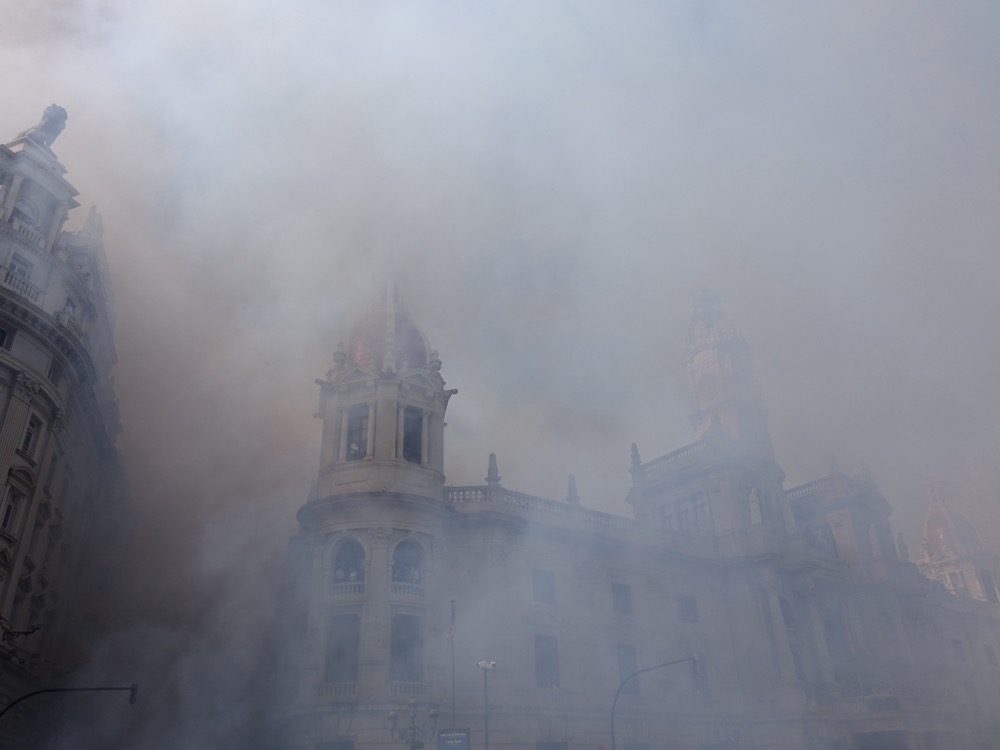
This is where I expect your phone to be at its worst. A square packed solid, with every phone on the same few masts, means messages queue, maps spin and calls fail for the half hour around 2pm, on any network. The operators add capacity in the centre during the festival, and 5G helps, but the square still slows to a crawl. These are the habits I would copy:
- A meeting point outside the square. Choose a street corner or a café a few blocks away, not "by the town hall". Agree it before you go in.
- Live location, shared early. Share it with your group while the signal is good. It keeps updating in short bursts even when messages stall.
- Screenshots. Keep the hotel address, train tickets and restaurant booking as images, not behind a page that has to load.
- Ears. The locals open their mouths when it starts. I would pack earplugs for children.

4 · The monuments, the Ofrenda and the nights
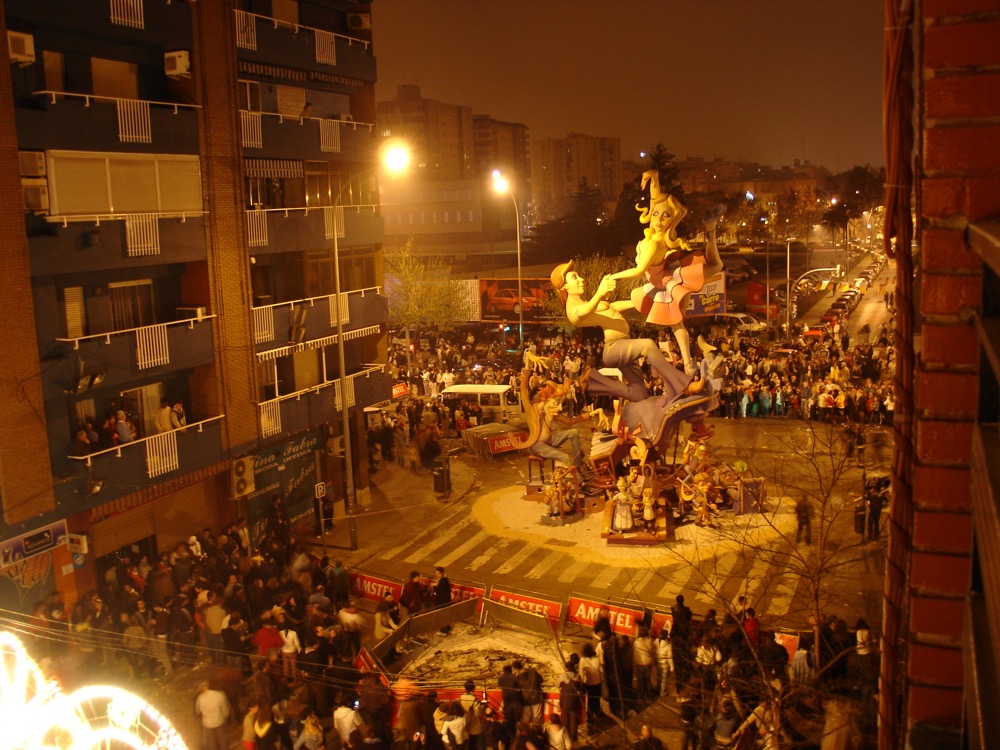
From the plantà on 15 March the fallas stand in the streets and squares of every neighbourhood: huge satirical monuments of wood, cardboard and paint, with a smaller children's falla next to most of them. Walking from one to the next is the festival for most visitors, and I count it as a maps job. The prize-winning ones draw queues, and the official Fallas apps and maps list where each one stands.
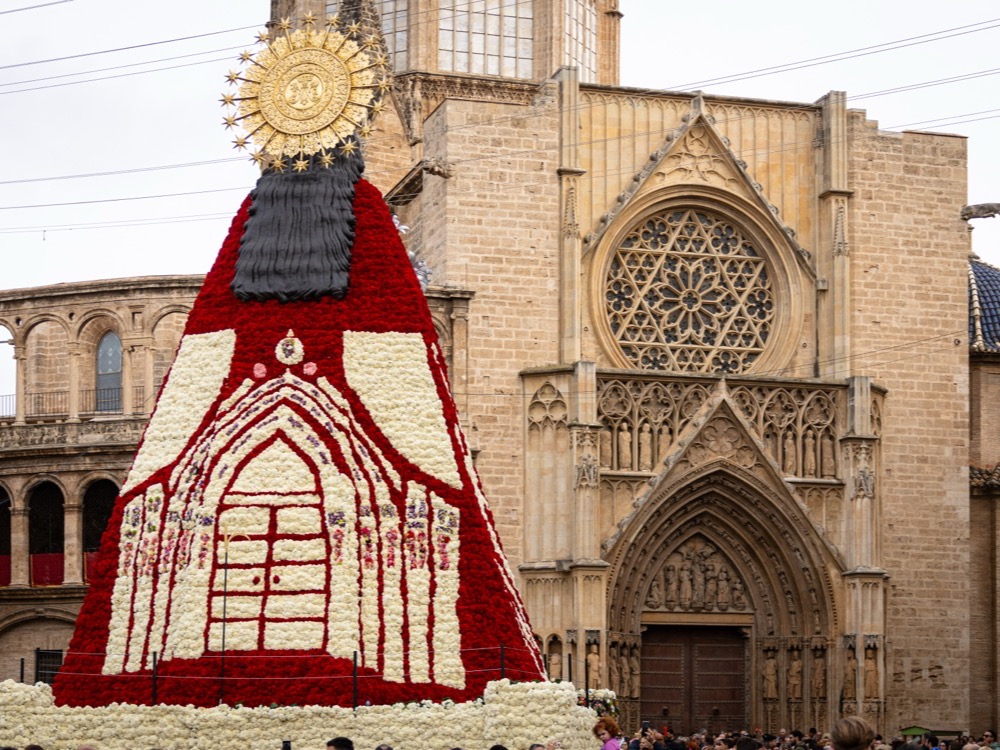
On the last days of the festival the falleras carry flowers in the Ofrenda to the Plaza de la Virgen, where they are woven into a mantle for the figure of the Virgin beside the cathedral. Evenings run late, with bands, street parties and the big night fireworks. The old centre is closed to traffic for much of the week, so I would walk or take the metro, and not count on a taxi.
5 · The Cremà
On the night of 19 March, Saint Joseph's day, the monuments burn. The children's fallas go first, then the big ones through the night, with the falla in the Plaza del Ayuntamiento usually the last. Firefighters stand by and hose down the buildings next door, and the heat carries a long way back.

That night every network in the centre is busy again, and the night buses and metro are full. If you fly out on 20 March, I would book the taxi or the train to the airport ahead and keep the confirmation as a screenshot.
6 · Valencia and the day trips
Outside the festival centre, Valencia is a flat, connected city that is easy to get around, with the metro and trams, the buses and the bike lanes along the old riverbed of the Turia. The City of Arts and Sciences sits at the end of it, and the beaches at Malvarrosa are a tram ride from the centre.
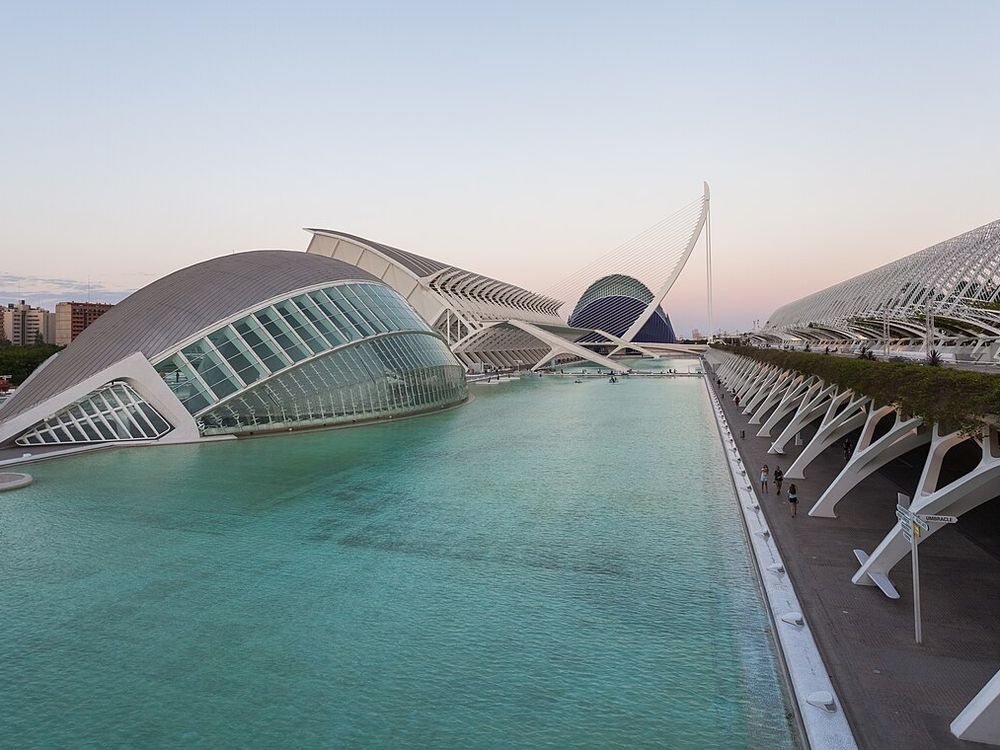
The classic day out is the Albufera, the lagoon south of the city where paella was born, with boat trips at sunset from El Palmar. Coverage is good across the flat rice fields. Sagunto's castle and Xàtiva are short train rides away, and the fast train to Madrid takes about two hours. Ferries to Ibiza and Mallorca sail from the port, and the covers the crossing and the islands. Are you staying for a semester? The covers Valencia as a student.

7 · What two weeks of unlimited data costs
I read the , which priced the brands most people search for on the same day, 22 October 2026. Below I set Ringo Light against the cheapest rival in each unlimited chart, with the length each one sells.
Swipe to compare →
Prices change. The comparison post has every brand and the full method.
8 · Which Ringo plan, and how to set it up
Ringo Light is the data eSIM I write for. It is sold to fund the full Ringo, one plan that works everywhere with your own number ported onto it. You install it once, next to your own SIM. Your number stays on your own line for calls and messages, and the eSIM carries the data.
- The Spain plan, for the festival and the days around it, with unlimited data at full speed, 3 days for $8.99, 2 weeks for $16.99 or 30 days for $26.99, nothing that renews.
- The Europe plan, which includes Spain, for a trip that goes on across the border: 33 countries, 2 weeks for $22.99 or 30 days for $35.99.
- The Global plan, for months on the road: $49.99 a month for 133 countries, renewing until you cancel.
I would install the eSIM on Wi-Fi before you fly, turn Data Roaming on for the eSIM line, and set it as your data line. The step-by-step is in the and .
The card below sells the Spain plan, and the same plan is at ringoesim.com/spain.