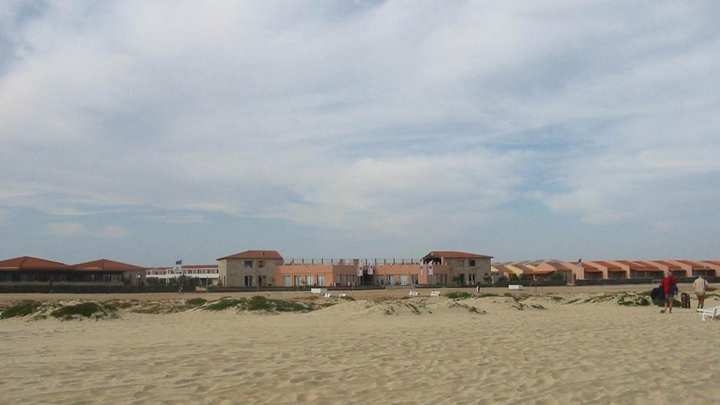
Why Cape Verde
Cape Verde (Cabo Verde) is the African / Atlantic-island country halfway between Brazil and Europe, made of 10 islands of volcanic geography, Lusophone culture, and tradewind beaches. The Remote Working Cabo Verde Programme (since 2020) is the dedicated nomad route: 6 months initial, renewable to 12 months total. The country runs on Cabo Verdean escudo (pegged to the euro), the time zone is GMT-1 (1 hour behind Lisbon, perfect for European-time-zone remote work), and Sal and Mindelo have just enough nomad infrastructure to make a real stay work.
Who it suits. The remote worker who wants Atlantic-island life away from the mainstream nomad circuit. Kitesurfers and windsurfers: Sal and Boa Vista are world-class wind destinations. The couple looking for a 4-6 month Lusophone-cultural stretch as a Brazilian or Portuguese-language warm-up. Anyone wanting Africa-but-with-EU-time-zone-compatible-business-hours.
Who it doesn't. People who need scale, since Cape Verde's nomad community is tiny (a few hundred at most). People allergic to wind (Sal is famously windy). And anyone needing a major-city environment: Praia (the capital) is small (160k); Mindelo on São Vicente is smaller still (75k).
The visa, in plain English
Cape Verde runs one dedicated remote-worker route: the Remote Working Cabo Verde Programme. Tourist-stamp pathways exist but the programme is built for nomads.
Remote Working Cabo Verde Programme
- Eligibility. Foreign passport holder from EU / ECOWAS / Lusophone / North America. Working remotely as an employee for a non-Cape-Verdean company OR as a freelancer with foreign clients.
- Income threshold. €1,500/month minimum for the principal applicant (~$1,650 USD), evidenced by 6 months of bank statements. +€500/month per dependent.
- Length. 6 months initial, renewable once for another 6 (12 total max). Non-renewable beyond.
- Where to apply. Online via the dedicated Cabo Verde Tourism / immigration portal, OR on arrival at the airport (Sal, Boa Vista, Praia airports all process). Decision in 5–15 business days.
- Documents. Passport (valid 6+ months), employment contract or freelance evidence, 6 months of bank statements, valid health insurance, accommodation proof (or hotel booking covering the first 30 days), €60 application fee.
- Tax. The 6-month cap means most visa holders stay below Cape Verde's tax-residency threshold (183+ days). Foreign-source income remains untaxed during the visa.
- Family. Spouse and dependent children can be added on the same application with the per-dependent income uplift.
Reviewed in May 2026. Visa rules change. Confirm with the official source: caboverde.com/remoteworking (Remote Working Programme) and your nearest Cabo Verde consulate before applying.
Cost of living
Cape Verde is mid-tier on cost: cheaper than Mauritius, more expensive than mainland West Africa. Sal's Santa Maria furnished 1BRs run CVE 75,000–120,000 ($770–1,235). Mindelo on São Vicente is the cheapest hub (CVE 55,000–90,000 / $565–925). Praia (capital, on Santiago island) is the bigger-city option.
Solo nomad in Sal (Santa Maria), monthly:
- Rent. Furnished 1BR / studio beach-adjacent: CVE 75,000–120,000 ($770–1,235)
- Groceries (Sucupira market, supermarkets): CVE 25,000–40,000 ($255–410)
- Transit (taxi + occasional rental car): CVE 8,000–18,000 ($80–185)
- Coworking (Pé na Areia + remote-friendly cafés): CVE 12,000–22,000 ($125–225)
- Eating out (Cabo Verdean + European): CVE 30,000–50,000 ($310–515)
- Gym (Sal Sport, Mindelo Sport Club): CVE 4,000–7,000 ($40–70)
- Entertainment (kitesurfing, scuba, island-hopping flights): CVE 15,000–30,000 ($155–310)
- Total: ~$1,500 USD / month
Swipe to compare →
Private health insurance for nomads runs $50–110 USD/month at international plans (SafetyWing, Cigna Global). Cape Verde has limited specialist healthcare, so most expats fly to Lisbon (4h) or Dakar (1.5h) for serious medical. Travel insurance with evacuation cover is non-optional.
Internet & connectivity
Cape Verdean connectivity has improved sharply since the 2024 fiber upgrade. CV Telecom (Unitel T+) and CV Móvel push 100–300 Mbps fiber across Santa Maria (Sal), Mindelo, Praia. Median fixed download is around 50 Mbps, modest but workable. Mobile 4G+ covers the populated parts of all 10 islands.
Café coworking is limited but real in Sal's Santa Maria (Tortuga Beach Café, Cafe Criolu) and Mindelo (Casa Café). Pé na Areia is the dedicated nomad coworking on Sal.
The thing nobody tells you about a Cape Verdean year. You'll island-hop. Sal → São Vicente by flight or ferry, Sal → Santo Antão for hiking, Praia → Fogo for the volcano. Each leg tempts you into a new local CV Telecom prepaid. Each new SIM means a new Cabo Verdean number. Which means your bank's 2FA code lives on a SIM in Santa Maria while you're on a Santo Antão hike.
Ringo's answer for the data is the Cape Verde eSIM at the top of this guide: a prepaid plan, unlimited data at full speed for 7 days, 2 weeks or 30 days, from $87.99, by email in seconds and installed next to the SIM you already have. Your number stays on your own SIM, so calls, SMS and the bank's codes keep landing where they always did; the eSIM only carries the data. The full Ringo service, one plan that works everywhere with your own number ported, is still being built; every plan bought here funds it.
Where to live
- Sal. Santa Maria. The nomad-and-kitesurf capital. Beachfront promenade, restaurants, the dedicated coworking. CVE 75,000–120,000 ($770–1,235). Best for: first-timers, kitesurfers / windsurfers.
- São Vicente. Mindelo. The cultural capital: music, art, the deepest Cabo Verdean identity. CVE 55,000–90,000 ($565–925). Best for: writers, cultural-immersion stays.
- Santiago. Praia. The political and economic capital. Biggest city (160k), more urban feel. CVE 60,000–100,000 ($620–1,030). Best for: longer stays with city access.
- Boa Vista. Quieter sister island to Sal. White beaches, kitesurfing, fewer crowds. CVE 65,000–100,000 ($670–1,030). Best for: deep-island rotations.
- Santo Antão. The hiking island, dramatic mountain geography. Very limited nomad infrastructure but the most scenically rewarding. CVE 40,000–70,000 ($410–720). Best for: a 1-2 month nature-immersion stretch.
Coworking & community
Coworking spaces worth a desk:
- Pé na Areia. Santa Maria, Sal. The dedicated nomad coworking + co-living. ~€220/month hot desk.
- Casa Café Mindelo. São Vicente. Premier café in the cultural capital: laptop-friendly, fast Wi-Fi. Café spend only.
- Workshop Praia. Praia, Santiago. Modest but functional coworking in the capital. ~€180/month.
- Tortuga Beach Café (Sal). Co-working-adjacent café at Tortuga Beach. Café spend only.
Communities worth joining day one:
- Nomad List Cape Verde. Paid, small but useful.
- Cape Verde Digital Nomads on Facebook (5k+). Small but real visa + housing community.
- Sal Kite & Surf Community. Real industry network on Sal.
Practical setup
- Banking. Most nomads run on Wise + a US/EU debit card. BCA (Banco Comercial do Atlântico) and BCN (Banco Cabo-verdiano de Negócios) can open accounts for Remote Working Programme holders but the process is slow. CVE is pegged to EUR (110.265 to 1) so currency risk is low.
- NIF (tax ID). Required if you exceed 183 days. Apply at the local tax office (Direcção-Geral das Contribuições e Impostos). Free.
- Healthcare. International insurance (SafetyWing, Cigna Global) is the practical default. For serious cases, fly to Lisbon (4h) or Dakar (1.5h). Travel insurance with evacuation cover is non-optional.
- Inter-island travel. Binter Cabo Verde and TACV (Cabo Verde Airlines) run the inter-island flights at €50–100 per leg. Ferries (Fast Ferry, Sotavento) connect some islands more cheaply but with weather-dependent schedules.
- Driving. Get an International Driving Permit. With it, you can rent a 4×4 on Sal / Boa Vista or a sedan on Santiago. Driving is on the right.
- Accommodation platforms. Airbnb monthly is the standard nomad path. Sal Properties (local real-estate) and the Cape Verde Digital Nomads Facebook group for off-market.
Useful links
- caboverde.com/remoteworking. Remote Working Cabo Verde Programme.
- governo.cv. Cape Verdean government services.
- mf.gov.cv. Ministry of Finance.
- minsaude.gov.cv. Ministry of Health.
- nomadlist.com/cape-verde. Costs, ratings, member chat.
The honest downsides
- Small community. Cape Verde's nomad scene is genuinely small. A few hundred long-stay nomads at most. After 2 months you'll know most of them.
- Inter-island logistics. The 10 islands feel like 10 different countries. Flights are €50–100 per hop and weather-dependent. Plan accordingly.
- Healthcare. Specialist care is limited; Lisbon or Dakar for serious cases. Evacuation insurance is non-optional.
- Wind on Sal. Sal is famously windy (which is why kitesurfers love it). If you don't love wind, Santiago or Brava might suit better.
- Language. Portuguese is the official language; Crioulo (Creole) is spoken every day. English in Santa Maria's tourist zones works; outside, Portuguese is needed.
A 30-day on-arrival checklist
- Day 1–3. Land at Sal (SID) or Praia (RAI). Confirm your Remote Working Programme stamp at immigration. Move into first accommodation.
- Day 3–7. Get familiar with the local taxi system: taxis don't use meters; agree price upfront. A rental car for inter-island use is useful if staying long.
- Week 2. Put the data on an eSIM, not a local prepaid. A CV Telecom prepaid comes with a new Cape Verdean number you will outgrow the moment you island-hop to São Vicente. The Cape Verde data eSIM at the top of this guide installs in one scan and runs next to your own SIM, so your bank, your accountant and your codes keep reaching the number you already have.
- Week 2. Pick your "base" island. Sal for kitesurfing; Mindelo for culture; Praia for city.
- Week 2. Plan a coworking. Pé na Areia (Sal) is the dedicated option.
- Week 3. Buy international insurance (SafetyWing, Cigna Global, IMG Global). Travel insurance with evacuation cover is mandatory.
- Week 3. Schedule at least one inter-island trip per month. The variety is what makes Cape Verde Cape Verde.
- Week 4. Find your Cachupa spot, your kitesurfing routine, your favourite Mindelo morna concert (Cape Verdean traditional music), your hiking trail on Santo Antão. The point of 6-12 months in Cape Verde isn't the visa. It's the depth the time allows.