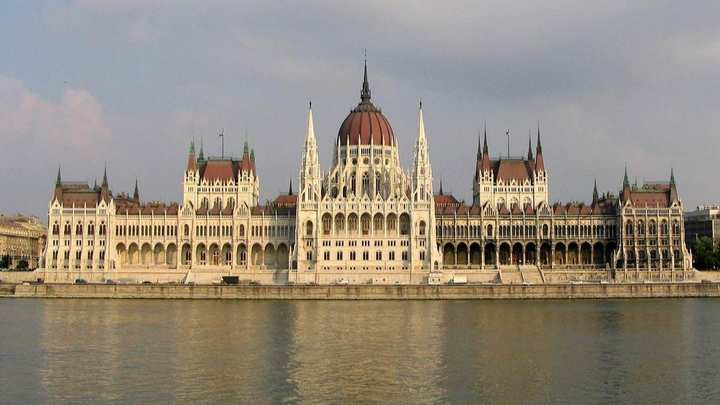
Why Hungary
Hungary is the central-European nomad pick that delivers Vienna-quality city life at Prague-or-cheaper prices. Budapest is genuinely one of Europe's most beautiful capitals: the Danube cuts the city in two between Buda's hills and Pest's grand boulevards, the thermal baths predate the Romans, the café-and-pastry scene is on par with Vienna. The White Card (since 2022) is the dedicated remote-worker visa: 12 months renewable to 24, Schengen access, real residency.
Who it suits. The freelance designer, developer, or consultant who wants a real Schengen base at a price-point well below Western European capitals. The thermal-bath obsessive (Hungary has 1,500+ thermal springs). The couple looking for a year of café culture, classical music, and weekend Vienna / Krakow / Prague trips. Hungary is one of the cheapest EU capitals to live well in.
Who it doesn't. People allergic to bureaucracy in Hungarian. People who need a thick anglo nomad community; Budapest's is real but smaller than Lisbon's or Berlin's. And anyone who follows EU politics closely and is uncomfortable with the Orbán-government context. It's a real backdrop.
The visa, in plain English
Hungary runs one dedicated remote-worker route (the White Card), plus the EU Blue Card for employees with Hungarian employers.
White Card (the headline route)
- Eligibility. Non-EU/EEA national working remotely as an employee of a non-Hungarian company OR as a freelancer with non-Hungarian clients OR owning a non-Hungarian-registered company. Cannot work for or invoice Hungarian-registered entities.
- Income threshold. €3,000+/month gross (~$3,300 USD), averaged over the prior 6 months.
- Length. 1 year initial, renewable for 1 more year (2 total max). The White Card does NOT lead to permanent residency directly; for that you switch to another visa category after the 2 years.
- Where to apply. At a Hungarian consulate or embassy abroad, OR in-country at a National Directorate-General for Aliens Policing (OIF) office while on a tourist stamp. The in-country route is common.
- Documents. Passport, employment contract or freelance evidence, 6 months of bank statements, criminal background check, accommodation proof, comprehensive Hungarian health insurance, €110 fee.
- Tax. Hungary has one of the lowest personal income tax rates in the EU: 15% flat. If you spend 183+ days in Hungary you become tax resident on worldwide income; below that you remain non-resident for foreign income. The "KATA" simplified flat-tax for sole traders is more restrictive in 2026 than it was in 2022, so confirm current rules with a Hungarian accountant.
- Family. Spouse and dependent children can be added on family-reunification visas tied to the White Card.
Reviewed in May 2026. Visa rules change. Confirm with the official source: oif.gov.hu (White Card) and konzuliszolgalat.kormany.hu (consular service) before applying.
Cost of living
Budapest is meaningfully cheaper than Prague or Warsaw. Central 1BRs in Pest's V, VI, VII districts run HUF 250,000–400,000 (€625–1,000). Buda is slightly cheaper. Outside the capital, every city is dramatically cheaper.
Solo nomad in Budapest (District V/VI/VII), monthly:
- Rent. Furnished 1BR central: HUF 280,000–400,000 (€700–1,000)
- Groceries (Aldi, Lidl, Spar): HUF 110,000–150,000 (€275–375)
- Transit (BKV monthly): HUF 9,500 (€24)
- Coworking (KAPTÁR, Loffice, Mosaik, hot desk): HUF 60,000–95,000 (€150–240)
- Eating out (Hungarian + international): HUF 110,000–170,000 (€275–425)
- Gym (BodyArt, Performa): HUF 15,000–28,000 (€38–70)
- Entertainment (thermal baths, concerts, ruin bars): HUF 55,000–85,000 (€140–215)
- Total: ~€1,500 / $1,640 USD / month
Swipe to compare →
Private health insurance for nomads runs €30–60/month at Generali Hungary, Allianz, or international (Cigna Global). Once you contribute to TB (public social security) via Hungarian employment, the public health system kicks in. Top private hospitals: Medicover, FirstMed, Telki Private Hospital.
Internet & connectivity
Hungarian connectivity is genuinely strong. Magyar Telekom, Vodafone Hungary, Digi Hungary, Yettel push 1 Gbps fiber to most Budapest addresses for HUF 8,500–15,000 (€21–38) per month. Median fixed download is around 130 Mbps per the Speedtest Global Index. Mobile 5G blankets Budapest and most major cities.
Café coworking is real in Budapest's Districts V, VI, VII. Telep, Madal, My Little Melbourne, Espresso Embassy. The café culture is a real thing, with laptop sessions tolerated for hours.
The thing nobody tells you about a Hungarian year. You'll bounce within Central Europe. Budapest → Vienna for a long weekend (3-hour train), Budapest → Krakow, Budapest → Prague, Budapest → Lake Balaton. Each trip tempts you into a new local SIM. Each new SIM means a new Hungarian number. Which means your bank's 2FA code lives on a SIM in District VII while you're at a Croatian beach.
Ringo's answer for the data is the Hungary eSIM at the top of this guide: a prepaid plan, unlimited data at full speed for 3 days, 2 weeks, 30 days or 90 days, from $8.99, by email in seconds and installed next to the SIM you already have. Your number stays on your own SIM, so calls, SMS and the bank's codes keep landing where they always did; the eSIM only carries the data. Moving on after Hungary? The Europe plan (33 countries), the Europe Power Use plan (33 countries) and Global (133 countries) run on one eSIM and sit a tap away above the card. The full Ringo service, one plan that works everywhere with your own number ported, is still being built; every plan bought here funds it.
Where to live
- Budapest. District VI (Terézváros) / VII (Erzsébetváros). The expat ZIPs. Walkable, café-dense, ruin-bar nightlife in District VII. HUF 320,000–450,000 (€800–1,125) furnished 1BR. Best for: first-timers.
- Budapest. District V (Belváros). The CBD-and-government core. More tourist-and-business, walkable to everything. HUF 360,000–500,000 (€900–1,250). Best for: short stays.
- Budapest. District IX (Ferencváros). Up-and-coming, cheaper, the new café scene. HUF 250,000–380,000 (€625–950). Best for: 2nd-year residents.
- Budapest. District II (Buda hills). Across the river. Leafier, more residential, slower pace. HUF 280,000–420,000 (€700–1,050). Best for: longer stays, couples.
- Lake Balaton (summer rotation). Hungary's "sea". Cheap off-season, busy in summer (June–August). HUF 200,000–350,000 (€500–875). Best for: 1–2 month summer stretches.
Coworking & community
Coworking spaces worth a desk:
- KAPTÁR. Budapest (District VI). The largest Budapest coworking, café-vibe, frequent events. ~€200/month hot desk.
- Loffice. Multiple Budapest locations. Premium design-led. ~€220/month.
- Mosaik. Budapest (District VII). Bohemian, smaller, social. ~€170/month.
- Regus / Spaces. Multiple Budapest locations. Corporate-grade. ~€260/month.
- Impact Hub Budapest. Startup-flavoured, community-led. ~€180/month.
Communities worth joining day one:
- Nomad List Budapest. Paid, most active for short-term arrivals.
- Expats in Budapest on Facebook (60k+). Visa-question + apartment-listings firehose.
- Budapest Tech Meetup. Weekly events, real engineers.
Practical setup
- Banking. OTP Bank, Erste Bank Hungary, K&H Bank are the main banks. Revolut and Wise work fully with Hungarian SEPA. OTP is the easiest for foreigners on the White Card.
- Address card. Register your address at the local government office within 3 days of moving. Trivial process but required for tax / health admin.
- TIN (tax ID). Issued automatically when you register with NAV (the tax authority). Free.
- Healthcare. Private (€30–60/month at Generali, Allianz) initially. Once contributing to TB via Hungarian self-employment, public access kicks in. Medicover and FirstMed are the expat private hospital defaults.
- Tax. 15% flat personal income tax. KATA simplified flat-tax for sole traders is more restrictive in 2026 than 2022, so confirm with a Hungarian accountant.
- Accommodation platforms. Ingatlan.com for long-term Hungarian listings. Airbnb monthly for furnished. Facebook groups (Budapest Flat Rentals, Budapest Apartments for Expats) often have better off-market deals.
Useful links
- oif.gov.hu. National Directorate-General for Aliens Policing (White Card).
- konzuliszolgalat.kormany.hu. Consular service.
- nav.gov.hu. National Tax and Customs Administration.
- neak.gov.hu. NEAK (national health insurance fund).
- nomadlist.com/budapest. Costs, ratings, member chat.
The honest downsides
- White Card capped at 24 months total. Not renewable beyond 2 years. After that you switch to another visa category (work permit, family reunification). There is no direct path from White Card to permanent residency.
- Hungarian is hard. Different language family (Finno-Ugric), no Indo-European cognates, complex case system. English in Budapest's tech bubble works; outside that, Hungarian is the working language.
- Political context. The Orbán government has been at odds with the EU on rule-of-law issues for years. Media coverage of expats is generally welcoming but the political backdrop is real.
- KATA changes. The simplified flat-tax for sole proprietors was substantially tightened in 2022. Foreign-client freelancers can still use it but the math is less attractive than the 2018-2021 version.
- Winter darkness. December–February gets 8–9 hours of daylight. Many residents either lean into the thermal-bath culture or escape for a month.
A 30-day on-arrival checklist
- Day 1–3. Move into your first apartment. Get the rental contract signed and the landlord's address-card consent (required for registration).
- Day 3–7. Register your address at the local Government Window office (Kormányablak). Free, takes 30 minutes.
- Week 2. Submit White Card application at the OIF regional office. €110 fee. Decision in 30–45 days.
- Week 2. Put the data on an eSIM, not a local prepaid. A Magyar Telekom or Yettel prepaid comes with a new Hungarian number you will outgrow the moment you take the train to Vienna. The Hungary data eSIM at the top of this guide installs in one scan and runs next to your own SIM, so your bank, your accountant and your codes keep reaching the number you already have.
- Week 2. Pick a coworking. KAPTÁR or Loffice in central Budapest.
- Week 3. Open a Hungarian bank account (OTP, Erste). Need the registered address card.
- Week 3. Buy private health insurance from Generali or Allianz Hungary. Required for the White Card.
- Week 4. Find your kávéház, your favourite thermal bath (Széchenyi, Gellért, Rudas), your weekend Esztergom / Eger / Lake Balaton trip. The point of the year isn't the visa. It's the life you build inside it.