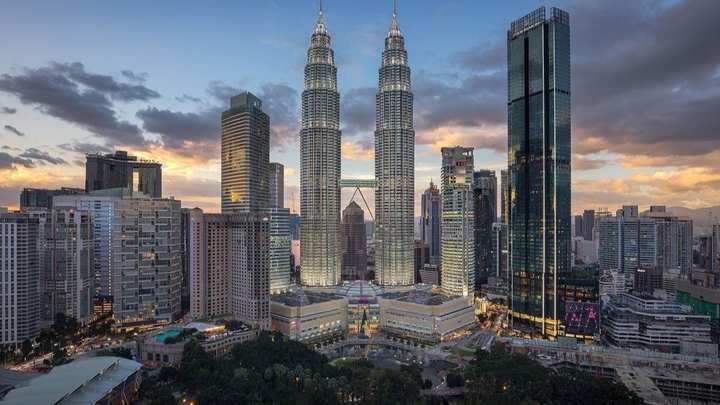
Why Malaysia
Malaysia is the Southeast Asian country where English is widely spoken (former British colony), Islamic and Chinese and Indian and indigenous cultures genuinely co-exist, food is one of Asia's greatest, and the Penang / KL / Langkawi triangle delivers a year of variety at half the Singapore price. The DE Rantau Nomad Pass (since 2022) is the dedicated remote-worker visa: 12 months renewable once for another 12 (24 total).
Who it suits. The remote worker who wants Asian cost-of-living with English-language ease. The food-obsessed traveller (Malaysian cuisine is genuinely one of the world's best). Couples looking for a year of KL-Penang-Langkawi rotation. The base-camp founder needing easy regional travel (KL is the SEA airline hub: Bangkok, Singapore, Bali all under 3 hours).
Who it doesn't. People who hate humidity: Malaysia is equatorial, 30°C and 80% humidity year-round. People expecting a deep nomad scene like Bali or Chiang Mai; Malaysia's is real but quieter. And anyone who needs alcohol very accessibly. It's available but more expensive and less prominent than in Thailand or Vietnam.
The visa, in plain English
Malaysia runs two routes for remote workers. The DE Rantau Nomad Pass is the headline route. The MM2H (Malaysia My Second Home) is the longer-term high-deposit alternative.
DE Rantau Nomad Pass (the headline route)
- Eligibility. Foreign passport holder working remotely for a non-Malaysian employer OR as a freelancer with foreign clients in tech, design, marketing, content, consulting.
- Income threshold. $24,000 USD/year minimum (~$2,000 USD/month).
- Length. 12 months, renewable for another 12 (24 total).
- Where to apply. Online via the Malaysia Digital Economy Corporation (MDEC) portal. Processing typically 2–6 weeks.
- Documents. Passport, employment contract or freelance evidence, 3 months of bank statements, criminal background check, valid Malaysian health insurance, MYR 1,000 (~$220) fee + MYR 500 (~$110) per dependant.
- Tax. The 183-day rule applies. Below it you remain non-resident for Malaysian tax purposes. Above 183 days you become Malaysian tax-resident on Malaysian-source income (0–30% progressive). Foreign income is generally not taxed for non-residents and is subject to specific exemptions for tax residents (recent reforms).
- Family. Spouse and dependent children can be added under the same Pass with the per-dependant fee.
MM2H (Malaysia My Second Home): the long-term alternative
- Eligibility. Requires MYR 500,000+ (~$110,000) fixed deposit in a Malaysian bank, plus monthly income proof of MYR 40,000+ (~$8,800/month). Tiered renewable 10-year visa with multiple Silver / Gold / Platinum levels (2024 reform).
- Where it fits. Long-term retiree / passive-income / property-investor route. Not the typical nomad route.
Reviewed in May 2026. Visa rules change. Confirm with the official source: mdec.my (DE Rantau) and imi.gov.my (Immigration Department) before applying.
Cost of living
KL is the priciest: central 1BRs in KLCC, Bangsar, Mont Kiara run MYR 3,500–5,500 ($770–1,210). Penang's George Town is 30–40% cheaper. Langkawi (the island) is cheaper still but with thinner coworking. The ringgit is weak, so a USD-earning nomad lives very comfortably.
Solo nomad in KL (Bangsar / Mont Kiara), monthly:
- Rent. Furnished 1BR central: MYR 3,000–5,000 ($660–1,100)
- Groceries (Jaya Grocer, Village Grocer, wet market): MYR 900–1,400 ($200–310)
- Transit (Touch 'n Go / Grab blend): MYR 300–500 ($66–110)
- Coworking (Common Ground, WORQ, hot desk): MYR 600–1,000 ($130–220)
- Eating out (hawker food + nicer dinners): MYR 1,000–1,600 ($220–350)
- Gym (Anytime Fitness): MYR 150–250 ($33–55)
- Entertainment (KL nightlife, weekend Penang, Cameron Highlands): MYR 500–900 ($110–200)
- Total: ~$1,300 USD / month
Swipe to compare →
Private health insurance for nomads runs $50–100 USD/month at AIA, Great Eastern, Allianz Malaysia. Top private hospitals: Gleneagles KL, Prince Court Medical Centre, Sunway Medical Centre. Public health is excellent for residents who contribute.
Internet & connectivity
Malaysian connectivity is solid in major cities. Unifi (TM), Maxis, Time push 500 Mbps–1 Gbps fiber in KL, Penang, JB for MYR 120–200/month ($26–44). Median fixed download is around 80 Mbps. Mobile 5G covers KL, Penang, JB.
Café coworking in KL's Bangsar / TTDI / Mont Kiara; Penang's George Town. Wi-Fi is fast, English-language menu is universal.
The thing nobody tells you about a Malaysian year. You'll travel constantly. KL → Singapore weekend, KL → Bangkok / Bali, Penang → Phuket, Langkawi → Koh Lanta. Each move tempts you into a new local Maxis or Digi prepaid. Each new SIM means a new Malaysian number. Which means your bank's 2FA code lives on a SIM in KL while you're in Singapore.
Ringo's answer for the data is the Malaysia eSIM at the top of this guide: a prepaid plan, unlimited data at full speed for 7 days, 2 weeks or 30 days, from $6.99, by email in seconds and installed next to the SIM you already have. Your number stays on your own SIM, so calls, SMS and the bank's codes keep landing where they always did; the eSIM only carries the data. Moving on after Malaysia? The Asia plan (20 countries) and Global (133 countries) run on one eSIM and sit a tap away above the card. The full Ringo service, one plan that works everywhere with your own number ported, is still being built; every plan bought here funds it.
Where to live
- KL. Bangsar / Bukit Bandaraya. The expat ZIP. Walkable, café-dense, restaurants. MYR 4,000–6,000 ($880–1,320) furnished 1BR. Best for: first-timers.
- KL. Mont Kiara / Sri Hartamas. Family-friendly, expat-heavy, international-school zone. MYR 3,500–5,500 ($770–1,210). Best for: families.
- KL. KLCC / Bukit Bintang. Downtown towers, central, walkable. MYR 4,500–7,000 ($990–1,540). Best for: corporate / short stays.
- Penang. George Town. UNESCO heritage, cheaper, smaller-scale, the country's nomad capital. MYR 1,800–3,500 ($400–770). Best for: longer cultural-immersion stays.
- Langkawi. Island life, duty-free, beach-front. MYR 2,000–3,500 ($440–770). Best for: 2–3 month rotation.
Coworking & community
Coworking spaces worth a desk:
- Common Ground. Multiple KL + Penang locations. Premium coworking chain. ~$220/month hot desk.
- WORQ. Multiple KL locations. Smaller, design-led. ~$180/month.
- WeWork KL. Multiple buildings. Corporate-grade. ~$250/month.
- Regus / Spaces. KL + Penang. ~$200/month.
- ArmadaHub. Penang (George Town). The Penang nomad anchor. ~$150/month.
Communities worth joining day one:
- Nomad List KL / Penang. Paid, most active.
- Expats in Malaysia on Facebook (90k+). Visa-question + apartment-listings firehose.
- Penang Digital Nomads on Facebook (15k+). Penang-specific.
Practical setup
- Banking. Maybank, CIMB, Hong Leong Bank are the foreigner-friendly defaults. Wise works for foreign-currency. Need DE Rantau Pass + address proof to open an MYR account.
- Tax registration. If you exceed 183 days, register at LHDN (Inland Revenue Board). Income tax is 0–30% progressive on Malaysian-source income.
- Healthcare. Private insurance ($50–100/month at AIA, Great Eastern, Allianz Malaysia). Top private hospitals: Gleneagles, Prince Court, Sunway Medical. Public is excellent but very busy.
- Touch 'n Go. Get the Touch 'n Go eWallet card the day you arrive. Used for transit (LRT, MRT, monorail, KTM Komuter, ETS trains), tolls, parking, and many retail payments.
- Tax residency. 183+ days makes you Malaysian tax-resident. Pair with a Malaysian accountant if your foreign income structure is complex.
- Accommodation platforms. iProperty and PropertyGuru for long-term. Airbnb monthly for furnished. Penang Facebook groups have off-market deals.
Useful links
- mdec.my/derantau. Malaysia Digital Economy Corporation (DE Rantau).
- imi.gov.my. Immigration Department of Malaysia.
- hasil.gov.my. Inland Revenue Board (LHDN).
- moh.gov.my. Ministry of Health.
- nomadlist.com/malaysia. Costs, ratings, member chat.
The honest downsides
- Humidity. Year-round equatorial: 27–32°C, 80% humidity. AC is non-optional. October–November and April–May rainy seasons bring daily afternoon downpours.
- Religion-and-law context. Malaysia is a Muslim-majority country with Sharia courts for Muslims (family law). Daily life for foreigners is unaffected, but social norms (alcohol, dress, public conduct) are more conservative than Thailand or Vietnam.
- Air quality. July–October "haze" season from Indonesian forest fires regularly puts KL's AQI above 100; some weeks above 200. Air-purifier at home and N95 masks for outdoor exercise.
- Smaller nomad scene. Real but smaller than Thailand or Bali. Penang and Bangsar are the cores.
- Driving. KL has notorious traffic. Public transit (LRT, MRT, monorail) is good in central KL but doesn't extend everywhere. Most expats live near a transit station.
A 30-day on-arrival checklist
- Day 1–3. Land at KLIA or Penang. Pick up a Touch 'n Go card. Move into your first apartment.
- Day 3–7. If applied online, your DE Rantau Pass should be in your passport. If in-country, complete the immigration check at the Putrajaya office.
- Week 2. Open a local bank account at Maybank or CIMB. Need DE Rantau Pass + address proof.
- Week 2. Put the data on an eSIM, not a local prepaid. A Maxis or Digi prepaid comes with a new Malaysian number you will outgrow the moment you fly to Singapore or Bangkok for the weekend. The Malaysia data eSIM at the top of this guide installs in one scan and runs next to your own SIM, so your bank, your accountant and your codes keep reaching the number you already have.
- Week 2. Pick a coworking. Common Ground or WORQ in KL; ArmadaHub in Penang.
- Week 3. Buy private health insurance from AIA, Great Eastern, or Allianz Malaysia.
- Week 3. If staying 183+ days, register at LHDN. Most foreign-source nomads pay 0 Malaysian tax under current rules.
- Week 4. Find your nasi lemak spot, your hawker stall, your favourite Penang food walk, your weekend Cameron Highlands route. The point of the year isn't the visa. It's the life you build inside it.