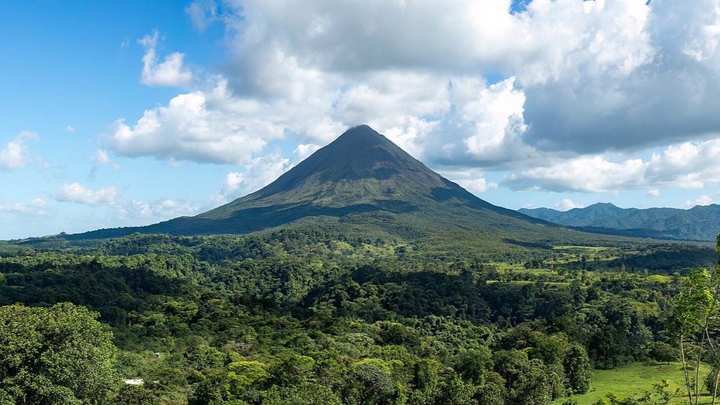
Why Costa Rica
Costa Rica is the nomad country for people who want the Latin-American cost-of-living + lifestyle without the safety asterisks. Stable democracy, no standing army since 1948, public healthcare that actually works, biodiversity you have to see to believe, two coastlines (Pacific surf, Caribbean reggae), and a US-aligned timezone (CST, no DST) that makes calls with New York at 3pm completely painless.
Who it suits. The remote engineer who wants surf before standup. The solo founder pitching US clients who needs the same business hours. The couple looking to shave 30–40% off a Brooklyn or LA budget without losing the comfort layer. The family who wants nature, bilingual schools, and an emergency room they trust.
Who it doesn't. People who hate humidity (the coast in October). People allergic to a 4×4 and a dirt road (most beach towns). People expecting big-city density (the country is 5 million; San José is the only proper city). And people sensitive to sticker shock: Costa Rica is meaningfully more expensive than Mexico, Colombia or Guatemala.
The visa, in plain English
Costa Rica gives remote workers two practical routes. The headline one is the dedicated Digital Nomad Visa (Estancia, Law 10008). The fallback most short-stayers use is simply a tourist stamp.
Estancia · Law 10008 · Digital Nomad Visa
- Eligibility. Non-resident remote worker or freelancer earning at least $3,000 USD/month (last 12 months bank statements) for a single applicant, or $4,000 USD/month for an applicant bringing a spouse and/or dependents. Income must be from a non-Costa-Rican source.
- Length. 1 year, renewable for a second year if you spent at least 80 days of the first year in country.
- Documents. Passport (valid 12+ months), 12 months of bank statements proving the income threshold, private medical insurance covering Costa Rica for the duration, an apostilled criminal background check is NOT required for the digital nomad visa (one of the things that make it cleaner than the residencia routes), application form, $190 government fee on approval.
- Processing. Submit fully online via the Migración portal at tramiteya.go.cr. Decision typically in 15–60 days. You can apply from inside Costa Rica on a tourist stamp.
- Tax. Foreign-source income is not taxed. Costa Rica taxes only Costa-Rican-source income. The 183-day "tax residency" trigger most countries use does not apply the same way here for foreign earners: you are statutorily a non-tax-resident on the digital nomad visa for foreign income.
- Family. Spouse and dependent children under 25 (in education) can be added on the same application at the higher income threshold.
- Driving + banking. Two underrated perks. The visa lets you drive on your home-country license for the full 24 months (otherwise tourists must exit/re-enter every 180 days to reset that right) AND lets you open a local colón/dollar bank account, which is otherwise nearly impossible without permanent residency.
The tourist-stamp fallback
- Length. Up to 180 days for most US, EU, UK, Canadian, Australian and most Latin-American passport holders. Issued on arrival, no application.
- Renewal. Border-run by land or air to a non-CR country, return, restart the clock. Many nomads who are unsure about the year-long commitment use this for the first 3–6 months and decide.
- What you give up. Cannot drive long-term on home license, cannot open a local bank account, no proof of long-term residence for some rentals.
Reviewed in May 2026. Visa rules change. Confirm with the official source: migracion.go.cr (Dirección General de Migración y Extranjería) and tramiteya.go.cr (online application portal) before applying.
Cost of living
Costa Rica is more expensive than its Latin-American neighbors. The country imports almost everything that isn't a banana. A solo nomad in San José or a Guanacaste beach town runs $2,000–2,400/mo at the comfortable middle. Santa Teresa and Nosara are the priciest pockets and have closed the gap with US small cities.
Solo nomad in San José (Escalante), monthly:
- Rent. 1BR central (Escalante, Los Yoses, Rohrmoser): $700–1,100
- Groceries (Auto Mercado / Pricesmart, cooking 4–5 nights/week): $320–420
- Transit (Uber + the occasional bus, no car): $120–180
- Coworking (WeWork / Capital / Selina hot desk): $220–280
- Eating out / sodas (a típico lunch + 3 nights out): $280–380
- Gym (Smart Fit / a SportSports): $30–55
- Entertainment (volcano weekends, surf trips, museums): $200–280
- Total: ~$2,100 USD / month
Swipe to compare →
Healthcare via private insurance for a solo nomad is $70–130/month on a CR-based INS or BMI plan, accepted at Hospital CIMA, Hospital La Católica and Clínica Bíblica (the three private hospitals nomads default to). Caja (public CCSS) is excellent and free at point of use once you contribute, but only kicks in once you're a resident, not on the digital nomad visa.
Internet & connectivity
Costa Rica's connectivity is a tale of two countries. The Central Valley (San José, Heredia, Cartago, Alajuela) is fully fibered. Kolbi (the state ICE telco), Liberty (the cable incumbent), and Tigo all push 300 Mbps to 1 Gbps symmetric for $35–55/month. The Pacific coast nomad hubs (Tamarindo, Nosara, Santa Teresa) have decent fiber in town and rapidly degrading service the further you walk from the main road. Median country-wide download is around 90 Mbps per the Speedtest Global Index. Mobile 5G is in the Central Valley and select Guanacaste corridors; everywhere else is solid 4G LTE.
Cafés are part of the work surface. Café Volío in Escalante, Franco in Barrio Escalante, Wilk in Santa Teresa, Café Tico in Tamarindo. Stable Wi-Fi, plug points, and a culture that doesn't push you out at 11am.
The connectivity trap. You will move. San José for the visa appointment, Tamarindo when you want to surf, Santa Teresa for high season, Limón for the Caribbean. Every move is a temptation to grab a Kolbi prepaid SIM, which gives you a new local Costa Rican number. Which means your bank's 2FA code lives on a SIM you left in a co-living drawer in Nosara.
Ringo's answer for the data is the Costa Rica eSIM at the top of this guide: a prepaid plan, unlimited data at full speed for 7 days, 2 weeks or 30 days, from $26.99, by email in seconds and installed next to the SIM you already have. Your number stays on your own SIM, so calls, SMS and the bank's codes keep landing where they always did; the eSIM only carries the data. Moving on after Costa Rica? The Latin America plan (18 countries) and Global (133 countries) run on one eSIM and sit a tap away above the card. The full Ringo service, one plan that works everywhere with your own number ported, is still being built; every plan bought here funds it.
Where to live
Coworking & community
Coworking spaces worth a desk:
Communities worth joining day one:
- Nomad List Costa Rica. Paid but the most active community for short-term arrivals.
- Costa Rica Digital Nomads on Facebook (35k+). Visa-question firehose, housing leads, ride-shares.
- Nomadas Costa Rica (Telegram). Mostly bilingual, strong Tamarindo + Nosara presence.
Practical setup
- Banking. Most nomads start with Wise for USD ↔ CRC at the real interbank rate. The digital nomad visa unlocks a local account at BAC Credomatic or Banco Nacional (you cannot open one on a tourist stamp). Carry a US Visa or Mastercard for the first weeks; ATMs (BCR, BNCR) charge ~$3 per withdrawal but accept foreign cards reliably.
- DIMEX (foreign ID number). Once your visa is approved, you receive a DIMEX (residency ID number). It's the SSN-equivalent: you'll be asked for it for everything from a gym membership to a rental contract.
- Healthcare. Private until residency. INS, BMI and Pan-American Life all sell expat plans accepted at CIMA, La Católica and Clínica Bíblica. Budget $70–130/month for a solo plan with a $1,500 deductible.
- Tax residency. Costa Rica taxes only Costa-Rican-source income. The digital nomad visa explicitly exempts foreign earnings. Confirm your home-country tax obligations independently. Leaving the US, UK, Canada or Australia does not automatically end your tax obligation there.
- Driving. Tourist stamp lets you drive on your home license for 180 days. The digital nomad visa extends that to the full 24 months. After that you must convert to a Costa Rican license at COSEVI.
- Accommodation platforms. Airbnb dominates the 1-month-furnished market here. Encuentra24 is the local long-term marketplace (12-month leases, Spanish helpful). Real-estate WhatsApp groups in each beach town beat any platform for off-market rentals.
Useful links
- migracion.go.cr. Dirección General de Migración y Extranjería (visa policy, all categories).
- tramiteya.go.cr. Online application portal for the digital nomad visa.
- hacienda.go.cr. Ministerio de Hacienda (tax authority).
- ccss.sa.cr. Caja Costarricense de Seguro Social (Caja, public health + social security).
- hospitalcima.com. Hospital CIMA (Escazú, top private).
- clinicabiblica.com. Clínica Bíblica (San José).
- coworker.com (Costa Rica). Searchable directory with reviews.
- nomadlist.com/costa-rica. Costs, ratings, member chat.
The honest downsides
- Imported-everything pricing. Cars, electronics, branded packaged food, even quality coffee beans (yes, in a coffee country) cost 25–60% more than the US thanks to import duties. Local produce, sodas and rent are the cheap layer.
- The October ceiling. Pacific-side nomad towns shut down 30–50% of restaurants and rentals during peak rainy season (mid-September to mid-November). Plan around it or leave.
- The 4×4 tax. If you live anywhere outside San José, Tamarindo town center, or a paved corridor, you need a high-clearance 4×4. Renting one is $900–1,300/month. Owning is the only way around it for a 12-month stay.
- Petty crime in San José. Violent crime is rare; opportunistic theft (smashed car windows, snatched phones) is common in central San José after dark. Most nomads who base in the capital live in Escazú or Escalante and Uber after 8pm.
- The tourist-stamp grey zone is closing. Border-running every 180 days on a tourist stamp while working remotely was the unspoken default for years. The 2022 Law 10008 gave the country a legal alternative, and migración has made it clear that the tourist stamp is not a long-term work-from-CR pathway. Use the digital nomad visa if you plan to stay 6+ months.
A 30-day on-arrival checklist
- Day 1–3. Land at SJO (Central Valley) or LIR (Guanacaste, closer for Tamarindo / Nosara / Santa Teresa). Pick up a SIM-free rental car if you're heading anywhere outside San José; book it before you fly. Confirm your first 30-day rental is locked in (don't commit to 6 months of housing sight-unseen).
- Day 3–7. Submit your Estancia application at tramiteya.go.cr. It's easier from inside the country, where you can scan documents at any service center.
- Week 2. Open a Wise USD ↔ CRC account if you don't have one. Order a Wise debit card to your Costa Rican address (~10 days). Most ATMs accept it.
- Week 2. Put the data on an eSIM, not a local prepaid. A Kolbi prepaid comes with a new Costa Rican number you will outgrow the moment you move from San José to Tamarindo. The Costa Rica data eSIM at the top of this guide installs in one scan and runs next to your own SIM, so your bank, your accountant and your codes keep reaching the number you already have.
- Week 2. Pick a coworking. The 1-month commitment is your social network for the next year.
- Week 3. Buy private health insurance from INS or BMI if you didn't already. Most plans require an in-country signature on a paper application.
- Week 3. Get a Costa Rican prepaid public-transport card (only matters if you're basing in San José). Download Waze and the Uber app. Tico drivers use Waze almost universally.
- Week 4. Find your soda, your café, your weekend volcano. The point of the year isn't the visa. It's the life you build inside it.