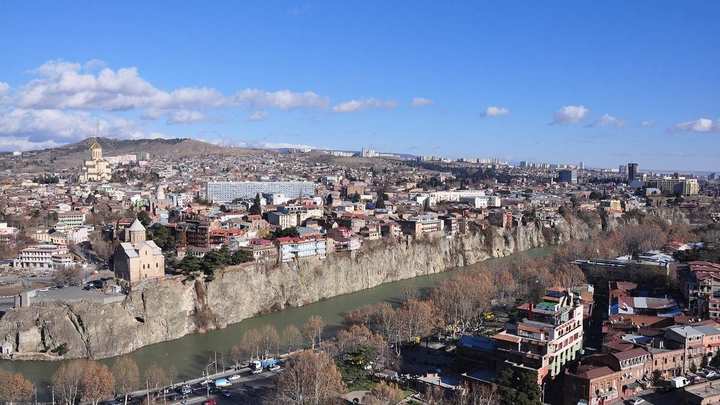
Why Georgia
Georgia (the country, not the US state) is the nomad unicorn that doesn't fit any conventional bucket. 365-day visa-free entry for citizens of 90+ countries: no application, just walk in. The "Remotely from Georgia" programme adds formal recognition, but the visa-free entry alone is enough for most. Tbilisi is one of the world's most underrated mid-sized cities: wine-and-feast culture, dramatic mountain geography, friendly people, EU-aspirant infrastructure, and a tax regime (the 1% Individual Entrepreneur status) that's the lowest you'll find without leaving Europe.
Who it suits. The freelancer or solopreneur earning $50k–$165k who wants the legal 1% tax rate via the IE programme. The traveller looking for a non-Schengen base from which to explore Armenia, Turkey, the wider Caucasus and Central Asia. The wine-and-food obsessive (Georgia invented winemaking 8,000 years ago, and the supra feast culture is real). The Westerner who wants Europe's last truly cheap capital before the country joins the EU.
Who it doesn't. People who want a polished, on-rails nomad scene like Lisbon or Bali: Tbilisi's infrastructure is mid-tier and the city still feels mid-process. People who need Schengen access (Georgia is not in the EU or Schengen). And anyone who can't handle a country with active political tension over Russian influence and EU integration. Local sentiment is sharp on both sides.
The visa, in plain English
Georgia is unusual: most Western remote workers don't actually need a visa to live there. The 365-day visa-free entry is the headline feature. The "Remotely from Georgia" programme adds optional formal recognition. The Individual Entrepreneur (IE) status is the tax-optimisation layer everyone reads about.
365-day visa-free entry (the default route)
- Eligibility. Citizens of ~95 countries (all of EU + UK, US, Canada, Australia, NZ, Japan, South Korea, Singapore, most Latin American, much of the Middle East). No application, no fee, no visa sticker: you simply enter at the border and get a 365-day stamp.
- Length. 365 consecutive days from entry. Easily extendable by simply leaving the country (an Armenia border run, a Turkey weekend, a one-day flight to Istanbul) and re-entering for another 365 days.
- What it covers. Residence, opening a bank account, signing rental contracts, registering a business, owning property. Essentially everything except automatic permanent-residency status.
Remotely from Georgia (the formal programme)
- Eligibility. Remote worker or freelancer with foreign-source income of at least $2,000 USD/month (or $24k/year). Mainly used by passport-holders from countries NOT on the 365-day visa-free list.
- What it grants. Up to 360 days of legal residence with health-insurance proof requirements. For citizens of the 365-day-visa-free countries it doesn't add much beyond formal recognition.
Individual Entrepreneur (IE) Small Business status (the tax route)
- What it is. A simplified small-business tax regime: 1% personal income tax on gross annual revenue up to GEL 500,000 (~$185,000 USD). Above that limit, the rate rises to 3% (still very low). Above GEL 500,000 sustained, you must convert to a regular business.
- Eligibility. Register as an Individual Entrepreneur (sole proprietor) at the Public Service Hall in Tbilisi (or other Georgian cities). Then apply for Small Business status with the Revenue Service. Both are walk-in processes.
- Tax residency. Spending 183+ days in any 12-month period makes you Georgian tax resident. Pair tax residency + IE Small Business status, and your global income from freelance / consulting work is taxed at 1%.
- Who it works for. Solo freelancers, consultants, agency owners with foreign clients earning $50k–$165k. Above that you can still benefit but the math gets more complex.
- Who it doesn't. Salaried remote employees of foreign companies: you cannot invoice your employer as an IE in most cases without restructuring. Talk to a Georgian accountant.
Reviewed in May 2026. Visa rules change. Confirm with the official source: geoconsul.gov.ge (consular service) and rs.ge (Revenue Service for IE registration) before applying.
Cost of living
Georgia is the cheapest capital city in Europe. Tbilisi's central neighbourhoods (Vake, Vera, Saburtalo, Sololaki) run $400–800 USD for a 1BR, comparable to Sofia or Skopje rather than any EU capital. Batumi (the Black Sea resort city) is similar off-season and 30–50% pricier in summer. Kutaisi is even cheaper but with a thinner foreign community.
Solo nomad in Tbilisi (Vake / Vera), monthly:
- Rent. Furnished 1BR central: GEL 1,300–2,200 ($475–810)
- Groceries (Goodwill, Spar, Carrefour): GEL 500–800 ($185–295)
- Transit (metro + Bolt blend, no car): GEL 150–300 ($55–110)
- Coworking (Terminal, Lokal Lokal, hot desk): GEL 500–900 ($185–330)
- Eating out (Tbilisi feast culture, supra dinners): GEL 600–1,000 ($220–370)
- Gym (Sportlife, World Class): GEL 200–400 ($75–145)
- Entertainment (wine bars, Borjomi weekends, Svaneti hiking, ski weekends): GEL 400–700 ($145–260)
- Total: ~$1,200 USD / month
Swipe to compare →
Private health insurance for nomads runs $30–80 USD/month with Aldagi, GPI Holding, or international plans (Cigna Global, Allianz Care for higher-tier coverage). Tbilisi's private hospitals (American Hospital Tbilisi, Tbilisi State Medical University Hospital, Israeli-Georgian Medical Research Clinic) are good but most expats keep international insurance and use Tbilisi for routine care, flying to Istanbul or Vienna for anything serious.
Internet & connectivity
Georgian connectivity is mid-tier on paper but better than the stats suggest in central Tbilisi. Magticom and Silknet push 100–500 Mbps fiber to most central Tbilisi apartments for GEL 70–150/month ($26–55 USD). Median fixed download is around 80 Mbps per the Speedtest Global Index. Mobile 4G+ is solid across Tbilisi, Batumi, and most of the country; 5G is launching in 2025–2026 across Tbilisi.
Café coworking in Tbilisi is real and dense. Sky Bar, Coffee Lab, Stamba District's café cluster, Khinkali House's quieter back rooms. Wi-Fi is generally fast; bring your own hotspot for critical calls.
The thing nobody tells you about a Georgia year. You'll bounce. Tbilisi for the workweek, Kazbegi for a mountain weekend, Batumi for a summer week, Kutaisi for the Easter weekend with locals, Yerevan or Istanbul for a quick reset. Each border run tempts you into a Magticom or Geocell prepaid SIM, which means a new Georgian number. Which means your bank's 2FA code lives on a SIM in a Tbilisi drawer while you're sampling Armenian apricot brandy in Yerevan.
Ringo's answer for the data is the Georgia eSIM at the top of this guide: a prepaid plan, unlimited data at full speed for 7 days, 2 weeks or 30 days, from $8.99, by email in seconds and installed next to the SIM you already have. Your number stays on your own SIM, so calls, SMS and the bank's codes keep landing where they always did; the eSIM only carries the data. Moving on after Georgia? Global (133 countries) run on one eSIM and sit a tap away above the card. The full Ringo service, one plan that works everywhere with your own number ported, is still being built; every plan bought here funds it.
Where to live
- Tbilisi. Vake. The upscale-but-walkable expat ZIP. Café-dense, park-anchored, good restaurants. GEL 1,500–2,500 ($550–920) for a 1BR. Best for: first-timers and longer stays.
- Tbilisi. Vera / Sololaki. The bohemian-and-design quarter, old-town adjacent. Cobblestone streets, wine bars, art galleries. GEL 1,200–2,000 ($440–740). Best for: cultural-immersion stays.
- Tbilisi. Saburtalo. Newer, more residential, cheaper. Family-friendly, well-connected to centre via Metro. GEL 900–1,500 ($330–550). Best for: 6+ month stays and couples.
- Tbilisi. Old Town (Avlabari / Abanotubani). Historic, scenic, touristy. Sulphur baths, narrow streets, cobblestones. GEL 1,500–2,500 ($550–920) for furnished. Best for: short stays and the Instagram backdrop.
- Batumi. The Black Sea resort. Off-season (October–April) is cheap and quiet; summer (June–August) is touristy and prices double. GEL 1,000–2,000 off-season, 2× in summer. Best for: 2–3 month summer rotation or a quiet winter month.
Coworking & community
Coworking spaces worth a desk:
- Terminal. Multiple Tbilisi locations (Stamba, Tabidze, Saburtalo). The premium chain, design-led, frequent events. ~GEL 700/month ($260) hot desk.
- Lokal Lokal Space. Vera, Tbilisi. Smaller, café-feel, expat-favourite. ~GEL 500/month ($185).
- Impact Hub Tbilisi. Startup-flavoured, community-led, Saburtalo. ~GEL 450/month ($165).
- Spaces / Regus. Tbilisi and Batumi. Corporate-feel, dependable. ~GEL 700/month.
- Fabrika Hostel & Suites. Not strictly coworking but the courtyard café in this hipster anchor is the unofficial Sunday-coworking spot for half of Tbilisi's nomads.
Communities worth joining day one:
- Nomad List Tbilisi. Paid, most active for short-term arrivals.
- Expats in Tbilisi on Facebook (35k+). The visa-question + apartment-listings firehose.
- Georgia for Digital Nomads on Telegram. Bilingual, the IE-tax-question hotspot.
Practical setup
- Banking. Georgia is unusually open. Bank of Georgia and TBC Bank are the two main banks; both allow non-residents (with just a passport!) to open a personal multi-currency account in 30 minutes. TBC also offers a fintech-style app called TBC Pay. This is one of the reasons Russians, Ukrainians and Western nomads concentrate here.
- Personal Number ID. Once you're staying long-term, get a Georgian Personal Number from the Public Service Hall. It's required for IE registration and useful for everything else.
- Individual Entrepreneur status. Apply at the Public Service Hall (Tbilisi has several; Marjanishvili Street is the main one). Then visit the Revenue Service to apply for Small Business status. Total time: 2–4 hours over 2 visits. Hire a Georgian accountant (~$150–300/month) before invoicing.
- Healthcare. Private insurance ($30–80/mo at Aldagi or GPI Holding). For serious care, fly to Istanbul, Vienna, or Tel Aviv, a common practice among Tbilisi expats.
- Tax residency. 183+ days in any 12-month period. Combined with IE Small Business status: 1% on revenue up to GEL 500,000 (~$185k USD/year). Confirm with a Georgian tax advisor before structuring anything.
- Accommodation platforms. MyHome.ge (Georgian, but with English filter) for long-term. Airbnb monthly for furnished. Facebook groups (Tbilisi Apartment Hunt) often have better deals than the platforms.
Useful links
- geoconsul.gov.ge. Consular service (visa-free country list, visa applications).
- moh.gov.ge. Ministry of IDPs, Labour, Health (residence permits).
- rs.ge. Revenue Service (IE registration, Small Business status, tax filing).
- psh.gov.ge. Public Service Hall (Personal Number, IE registration).
- bankofgeorgia.ge. Bank of Georgia (multi-currency accounts for non-residents).
- tbcbank.ge. TBC Bank.
- coworker.com (Georgia). Searchable directory.
- nomadlist.com/tbilisi. Costs, ratings, member chat.
The honest downsides
- Geopolitical context. Georgia is wedged between Russia and Turkey, with ongoing tension over EU integration, Russian sanctions, and the country's 20% under Russian-backed separatist control (South Ossetia, Abkhazia). The 2024 "foreign agents" law and resulting protests created visible friction. Read the news before you book a year.
- Tax structure isn't for everyone. The 1% IE Small Business rate works for foreign-client freelancers and consultants. For salaried employees, asset managers, capital-gains earners, or anyone earning above GEL 500k/year, the structure gets complex fast. Don't move for the tax without an accountant's blessing.
- Infrastructure is mid-tier. Roads are uneven, the metro is small (2 lines), and outside Tbilisi the road network thins quickly. Plan accordingly.
- Russian-speaking influx since 2022. Several hundred thousand Russians (often anti-war emigres) have relocated to Tbilisi since 2022. Many Georgians are conflicted about this. Rents have spiked in Vake / Vera, and you'll hear opinions across the spectrum. Russian-speaking is now almost a second working language in central Tbilisi.
- Language barrier. Georgian (Kartuli) is hard: different alphabet, unrelated to any major language family. English in Tbilisi is patchy; Russian is more useful. Outside the capital, Georgian-only is common.
A 30-day on-arrival checklist
- Day 1–3. Land at Tbilisi TBS or Kutaisi KUT. Lock in your first month accommodation (Airbnb monthly is fine while you scout). Walk to a Bank of Georgia or TBC branch to scope out account opening.
- Day 3–7. Open a Bank of Georgia or TBC personal multi-currency account. Bring just your passport. Non-resident account opening is genuinely 30 minutes. Get the GEL + USD + EUR cards.
- Week 2. If you plan to work as an Individual Entrepreneur: walk into the Public Service Hall (Marjanishvili Street) and register as IE. Then walk to the Revenue Service for Small Business status. Total time: 2–4 hours over 2 visits.
- Week 2. Put the data on an eSIM, not a local prepaid. A Magticom or Geocell prepaid comes with a new Georgian number you will lose at the Armenian border. The Georgia data eSIM at the top of this guide installs in one scan and runs next to your own SIM, so your bank, your accountant and your codes keep reaching the number you already have.
- Week 2. Pick a coworking. Terminal in Stamba, Lokal Lokal in Vera, or Impact Hub Tbilisi if you're founder-flavoured.
- Week 3. Hire a Georgian accountant if you've registered as IE. Quarterly tax filings are simple but having a local accountant ($150–300/month) is essential.
- Week 3. Buy private health insurance from Aldagi, GPI Holding, or an international plan if you'll travel often.
- Week 4. Find your khachapuri spot, your wine bar (g.Vino, 8000 Vintages, Wine Factory N1), your Sunday hike route (Mtatsminda Park, Lisi Lake). The point of the year isn't the visa-free entry. It's the life you build inside it.