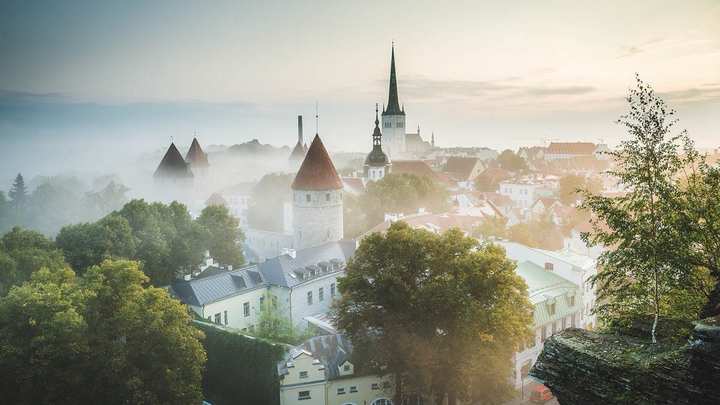
Why Estonia
Estonia is the country that built the digital state. You can incorporate a company, sign legal contracts, file taxes and renew prescriptions entirely from a laptop. Internet access is a constitutional right. The Digital Nomad Visa, launched 1 August 2020, was the world's first dedicated visa for location-independent workers. Estonia got there before Croatia, Spain, Portugal and Greece. The Type D long-stay version gives you up to 12 months of legal residence on foreign income.
Who it suits. The remote engineer or founder who wants Schengen access without Iberian rents. The e-Residency holder who finally wants to spend time in the country whose digital ID they've been using. The couple looking for a calm, safe, English-speaking capital where summers stretch from May to September. The privacy-minded nomad who'd rather live in a country with the strongest digital-rights record in the EU.
Who it doesn't. People who need year-round sun: Estonian winters are dark (4–6 hours of daylight in December). People who want a deep nomad scene like Lisbon's or Bali's: Tallinn's community is small, smart, and tightly clustered around Telliskivi and Kalamaja. And people who want to drift between cities: Tallinn is the only practical hub.
The visa, in plain English
Estonia runs two parallel routes a remote worker uses. The Digital Nomad Visa is the headline one. e-Residency is a complementary digital identity. It's worth knowing about, but it is not a visa or residence permit.
Digital Nomad Visa (the headline route)
- Eligibility. Non-EU/EEA national working remotely for a registered foreign employer, as a freelancer with foreign clients, or as an owner of a foreign-registered company. The work must be location-independent.
- Income threshold. €4,500/month gross in 2026 (indexed to ~6× the Estonian average net wage), shown across the last six months of bank statements.
- Two flavours. The Type C short-stay version covers up to 90 days within any 180-day Schengen period. The Type D long-stay version covers up to 12 months and is the route most nomads pick.
- Where to apply. At any Estonian embassy or consulate abroad, OR at the Police and Border Guard Board (PPA) once inside Estonia (only on the Type D, with proof of long-term intent). Processing: 15–30 days at most consulates.
- Documents. Passport (3+ months validity past visa expiry), proof of remote-work agreement or business ownership, bank statements showing the income threshold, health insurance valid in Estonia for the duration, accommodation proof, €100 visa fee.
- Family. Spouse / partner and dependent children require separate applications under different visa categories. The Digital Nomad Visa is single-applicant. Couples often coordinate two parallel applications.
- Tax. If you spend 183+ days in any 12-month period you become Estonian tax-resident on worldwide income. Estonia has a flat 22% personal income tax from 2025 and an unusual deferred corporate tax (0% on retained profits, relevant for e-Residency company owners). Most Digital Nomad Visa holders stay under 183 days and remain home-country tax-resident.
e-Residency (the parallel digital identity)
- What it is. A government-issued digital identity that lets you incorporate and run an EU-registered Estonian company entirely online. Useful for invoicing EU clients in EUR, for VAT, and for credibility with European partners.
- What it isn't. A visa, a residence permit, a tax residency, or any right to live in Estonia. The two systems are separate. You can be a nomad in Bali running an Estonian OÜ via e-Residency and never set foot in Tallinn.
Reviewed in May 2026. Visa rules change. Confirm with the official source: politsei.ee (Digital Nomad Visa) and e-resident.gov.ee (e-Residency) before applying.
Cost of living
Tallinn is the cheapest Nordic-feeling capital in the EU. A central 1BR rents for what a comparable Lisbon flat costs but a third less than Helsinki across the Gulf. Outside Tallinn, Tartu and Pärnu are roughly 30–40% cheaper but with a fraction of the coworking density.
Solo nomad in Tallinn, monthly:
- Rent. 1BR central (Kalamaja, Telliskivi, Vanalinn): €900–1,300
- Groceries (Selver, Rimi, Kalamaja market): €280–360
- Transit (free for registered Tallinn residents; €30 monthly card otherwise): €0–30
- Coworking (Workland, Spring Hub, Lift99, hot desk): €180–260
- Eating out (lounaa lunch deal + 3 nights out): €280–380
- Gym + saunas (MyFitness or a Vana Vesi sauna pass): €45–80
- Entertainment (Tallinn Music Week, weekend Helsinki trip, cinema): €120–200
- Total: ~€1,850 / $2,030 USD / month
Swipe to compare →
Healthcare via private insurance for a solo nomad runs €40–80/month with a Compensa, ERGO or Salva plan. EU EHIC and the public Haigekassa system kick in once you start paying social tax (employment-based). Most Digital Nomad Visa holders stay on private. Tallinn's North Estonia Medical Centre (PERH) and East Tallinn Central Hospital are EU-quality.
Internet & connectivity
Estonia is the connectivity benchmark you compare every other country to. Telia, Elisa, and Tele2 push 1 Gbps symmetric fiber to most Tallinn addresses for €25–40/month. Median fixed download nationally is around 160 Mbps per the Speedtest Global Index, and 5G blankets every city and most of the highway grid. Tartu and Pärnu have fiber; rural Setomaa thins to 4G+ but still works for video calls.
Cafés in Tallinn are a real coworking surface: RØST (Kalamaja), Lit Espresso Bar, Boheem, the Telliskivi cluster (F-Hoone, Sfäär). Fast Wi-Fi, plug points everywhere, and the culture treats laptop campers as completely normal.
The thing nobody tells you about an Estonian year. You won't bounce around Estonia (it's small). But you'll fly. Helsinki for a long weekend, Riga for the Latvian summer, Stockholm via the overnight ferry, a January week somewhere warm. Each trip tempts you into a new local SIM. Each new SIM means a new number. Each new number means your bank's 2FA code lives on a SIM in a drawer in Vilnius.
Ringo's answer for the data is the Estonia eSIM at the top of this guide: a prepaid plan, unlimited data at full speed for 7 days, 2 weeks, 30 days or 90 days, from $5.99, by email in seconds and installed next to the SIM you already have. Your number stays on your own SIM, so calls, SMS and the bank's codes keep landing where they always did; the eSIM only carries the data. Moving on after Estonia? The Europe plan (33 countries), the Europe Power Use plan (33 countries) and Global (133 countries) run on one eSIM and sit a tap away above the card. The full Ringo service, one plan that works everywhere with your own number ported, is still being built; every plan bought here funds it.
Where to live
- Tallinn. Kalamaja. The wooden-house hipster quarter just west of the Old Town. Café-dense, walkable, sea-close. €1,000–1,400 for a 1BR. Best for: first-timers and anyone who wants the closest thing Estonia has to a Berlin neighbourhood.
- Tallinn. Telliskivi / Põhja-Tallinn. The creative quarter: Telliskivi Creative City is the design-led hub a 5-minute walk from Kalamaja. €1,000–1,400. Best for: designers, startups, anyone who wants events on the doorstep.
- Tallinn. Old Town (Vanalinn). Medieval and beautiful, but expensive (€1,200–1,800) and touristy in summer. Best for: short stays where the experience matters more than the rent.
- Tartu. Estonia's university city, 2 hours south of Tallinn. Smaller, cheaper, surprisingly café-dense. €700–1,000 for a central 1BR. Best for: writers and quieter 3–6 month stretches.
- Pärnu. The summer-resort coast 2 hours south. Beach-front, sleepy, cheap (€600–950). Best for: a June–September stretch with weekend ferry trips to Saaremaa.
Coworking & community
Coworking spaces worth a desk:
- Workland. Multiple Tallinn locations. The premium chain: strong fiber, quiet, design-led. €260/month hot desk.
- Spring Hub. Telliskivi, Tallinn. Startup-flavoured, frequent events. €220/month.
- Lift99. Telliskivi, Tallinn. Founder-focused, community-curated, application-only memberships for committed members.
- Huub. Kalamaja, Tallinn. Smaller, café-vibe, drop-in friendly. €180/month.
- Regus / Spaces. Multiple Tallinn buildings. Dependable corporate option. €230–290/month.
Communities worth joining day one:
- Nomad List Tallinn. Paid, most active for short-term arrivals.
- Tallinn Tech Meetup. Weekly events, real engineers, free.
- e-Residents Community on Slack. The biggest Estonian remote-business community, free for e-Residents.
Practical setup
- Banking. Most nomads start with Revolut or Wise (both with EUR IBANs). For a local account, LHV Pank is the foreigner-friendly default: accepts e-Residents and Digital Nomad Visa holders, English UI, fast onboarding. Swedbank and SEB are the legacy options.
- ID-kaart / digi-ID. Once you have residence, you can apply for an Estonian ID card or digi-ID, the same ones e-Residents use. They let you log into every Estonian government service and sign documents legally online.
- Healthcare. Private insurance (€40–80/mo at Compensa, ERGO, Salva) is the default for Digital Nomad Visa holders. Once you start contributing social tax, Haigekassa (the public system) kicks in.
- Tax residency. 183+ days makes you Estonian tax-resident on worldwide income. Estonia has a flat 22% personal income tax from 2025. The unusual 0%-on-retained-profits corporate model is the e-Residency favourite.
- Accommodation platforms. KV.ee and City24 for long-term locals. Flatio and Airbnb for 1–3 month furnished.
Useful links
- politsei.ee. Police and Border Guard Board (Digital Nomad Visa, residence permits).
- e-resident.gov.ee. e-Residency programme (digital identity for non-residents).
- emta.ee. Estonian Tax and Customs Board (income tax, social tax).
- haigekassa.ee. Estonian Health Insurance Fund.
- coworker.com (Estonia). Searchable directory.
- nomadlist.com/estonia. Costs, ratings, member chat.
The honest downsides
- Dark winters. December–January get 4–6 hours of daylight. Many long-stay nomads either commit to the sauna culture and embrace it, or escape to the Canaries / Bali for 6 weeks. A SAD lamp is non-optional.
- Income threshold is high. €4,500/month gross is more than 2× Croatia's bar. Estonia is filtering for high-earning remote workers, not budget freelancers.
- Tallinn is the only real hub. Tartu and Pärnu have charm but thin nomad communities. If you don't like Tallinn, Estonia stops being interesting fast.
- Russian-language undercurrent. Tallinn has a large ethnic-Russian community (around 35–40%). Mostly invisible to a foreign nomad, but the post-2022 geopolitical climate has made it a more sensitive context than it used to be. Eastern Estonia (Narva, Sillamäe) feels markedly different from Tallinn.
- Small social pool. Estonia has 1.3 million people. The nomad community in Tallinn is tight: 200–400 active at any time. You'll know everyone by month three; whether that's a feature or a bug depends on your style.
A 30-day on-arrival checklist
- Day 1–3. Land in Tallinn (TLL is 15 minutes from the centre). Get a Tallinn city library card. It doubles as a free public-transit pass once you register your address.
- Day 3–7. Register your address at the local Tallinn District Office (free). Triggers free transit, voter rolls, and the ability to apply for an Estonian ID card later.
- Week 2. Open a local bank account at LHV Pank. Bring passport + visa + address registration. The debit card arrives in 5 days.
- Week 2. Put the data on an eSIM, not a local prepaid. A Telia or Elisa prepaid comes with a new Estonian number you will lose the next time you ferry over to Helsinki. The Estonia data eSIM at the top of this guide installs in one scan and runs next to your own SIM, so your bank, your accountant and your codes keep reaching the number you already have.
- Week 2. Pick a coworking. The 1-month commitment is your social network for the next year. Lift99 if you're a founder; Workland or Spring Hub for everyone else.
- Week 3. If you didn't already have one, apply for e-Residency. It takes 4–8 weeks for the digital ID card to arrive but unlocks Estonian company formation, digital signing, and EU VAT registration.
- Week 3. Buy private health insurance from Compensa, ERGO or Salva. Mandatory for the visa renewal.
- Week 4. Find your Telliskivi food spot, your sauna, your sea-swim point (Stroomi or Pikakari beaches). The point of the year isn't the visa. It's the life you build inside it.