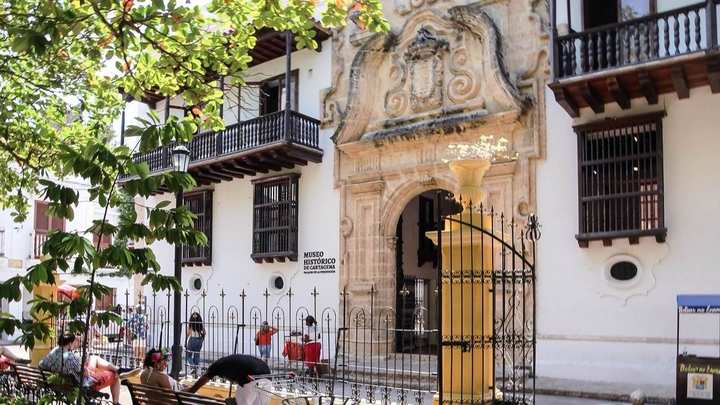
Why Colombia
Colombia is the LatAm country that quietly became one of the most-lived-in nomad hubs in the western hemisphere. The Digital Nomad Visa (Visa V Tipo Nómadas Digitales), launched in late 2022, gives you up to two years on foreign income. Medellín has the most-Instagrammed nomad scene in South America, El Poblado is now a fully built-out international café and coworking strip, and the peso's weakness against the dollar makes a comfortable life affordable in a way that's vanished from Mexico City.
Who it suits. The engineer or designer on a US salary who wants to put 2× more money into savings while still living in a real city. The founder who needs an English-friendly LatAm hub for a 6–12 month stretch. The couple chasing 18–24°C year-round in Medellín's "City of Eternal Spring". The salsa-dancer-in-disguise who's been waiting for an excuse.
Who it doesn't. People who need a low-friction visa process: Colombia's bureaucracy is real, and the in-country path requires multiple government office visits. Anyone uncomfortable with the (real but overstated) safety concerns of central Bogotá and parts of Medellín. And people who hate Spanish: outside El Poblado and tourist Cartagena, English is patchy.
The visa, in plain English
Colombia gives remote workers two routes that matter. The Digital Nomad Visa (Visa V) is the headline one. The Migrant Visa (Visa M for retirees / passive income) is the longer-game alternative.
Visa V Tipo Nómadas Digitales (the headline route)
- Eligibility. Foreign passport holder working remotely for a non-Colombian employer or as a freelancer with foreign clients. Aimed at digital nomads and tech workers under 50. Cannot work for any Colombian-registered entity.
- Income threshold. Roughly 3× Colombia's minimum wage in monthly income, about $1,000 USD/month in 2026. One of the lowest bars of any major nomad visa.
- Length. Up to 2 years, multi-entry. Renewable in some cases by applying for a Migrant Visa or another category.
- Where to apply. Entirely online via the Cancillería portal (Foreign Ministry). Decision typically in 5–15 business days. No consulate appointment required.
- Documents. Passport, motivation letter explaining the remote-work setup, bank statements showing the income threshold, health insurance valid in Colombia, motivation letter from your employer or a list of freelance clients, ~$54 application fee + ~$230 visa issuance fee on approval.
- Family. Spouse / partner and dependent children can be added as beneficiaries (visa V Beneficiario). Each pays the same issuance fee.
- Tax. First-year foreign-source income is generally not taxable in Colombia. From year 2, you become Colombian tax-resident if you spend 183+ days in any 365-day period, at which point you owe Colombian income tax on worldwide income (0–39% progressive). Most nomads structure their stay accordingly.
Visa M for retirees / pensionados / passive income
- Eligibility. Proof of stable retirement income (~3× minimum wage) or passive income (rental, dividends). 3-year multi-entry. Path to permanent residency after 5 years.
- Where it fits. Anyone with passive income who plans to stay long-term, or anyone over 50 who finds the V visa's "tech worker under 50" framing awkward.
Reviewed in May 2026. Visa rules change. Confirm with the official source: cancilleria.gov.co (visa portal) and migracioncolombia.gov.co before applying.
Cost of living
Colombia is one of the best dollar-to-quality ratios in the western hemisphere. El Poblado in Medellín has gentrified hard since 2022: central 1BRs now run $700–1,100 USD, up from $400 in 2019. Step out to Laureles, Belén or Envigado and the same square footage drops 30–45%. Bogotá is roughly Medellín-prices for a much bigger city, with worse weather.
Solo nomad in Medellín, monthly:
- Rent. Furnished 1BR in El Poblado / Laureles: $550–950
- Groceries (Carulla, Éxito, local market): $180–260
- Transit (metro + Uber blend, no car): $60–100
- Coworking (Atom House, Selina, Tinkko, hot desk): $140–220
- Eating out (menú del día + 3 nicer dinners): $200–320
- Gym (Bodytech, Smart Fit): $30–55
- Entertainment (salsa lessons, weekend Guatapé trips, Comuna 13): $130–200
- Total: ~$1,300 USD / month
Swipe to compare →
Healthcare via private insurance for a solo nomad runs $60–110 USD/month with a Sura, Colmédica or Coomeva plan. Once you're a resident contributing to EPS (mandatory ~12% of declared income), the public system kicks in. Private clinics (Clínica Las Vegas in Medellín, Fundación Santa Fe in Bogotá) are excellent and 1/4 the US cost out-of-pocket.
Internet & connectivity
Colombian connectivity is bimodal. Claro, Movistar and Tigo all push 300 Mbps–1 Gbps fiber to most central Medellín, Bogotá, Cali, Cartagena addresses for $25–45 USD/month. Median fixed download is around 90 Mbps per the Speedtest Global Index. Mobile 4G LTE blankets cities and most highway corridors; 5G is rolling out across Bogotá, Medellín, Cali and Barranquilla. The Caribbean coast and the Amazon thin to 4G+ but it works for video calls.
Medellín's café scene around El Poblado, Laureles and Provenza is a real coworking surface: Pergamino, Hija Mía, Velvet, Café Otraparte. Plug points are common, Wi-Fi is fast, and laptop campers are part of the scenery.
The thing nobody tells you about a Colombia year. You bounce. Medellín for 3 months, then a Cartagena beach weekend, a Bogotá conference week, a Salento coffee-region long-weekend, then back to Medellín. Each move tempts you into a Claro or Movistar prepaid SIM, which means a new Colombian number. Which means your bank's 2FA code lives on a SIM in your luggage you swapped out in Cartagena.
Ringo's answer for the data is the Colombia eSIM at the top of this guide: a prepaid plan, unlimited data at full speed for 7 days, 2 weeks or 30 days, from $16.99, by email in seconds and installed next to the SIM you already have. Your number stays on your own SIM, so calls, SMS and the bank's codes keep landing where they always did; the eSIM only carries the data. Moving on after Colombia? The Latin America plan (18 countries) and Global (133 countries) run on one eSIM and sit a tap away above the card. The full Ringo service, one plan that works everywhere with your own number ported, is still being built; every plan bought here funds it.
Where to live
- Medellín. El Poblado. The classic nomad ZIP. Tree-lined streets, café-dense Provenza strip, walkable to Parque Lleras nightlife. $700–1,100 for a 1BR. Best for: first-timers who want the full Medellín experience and don't mind paying for it.
- Medellín. Laureles / Estadio. 25–35% cheaper than El Poblado ($500–800), flatter and more walkable, real local feel. Best for: longer stays and anyone who's been to El Poblado once already.
- Medellín. Envigado. Suburban municipality just south. Cheaper still, family-friendly, slower pace. $400–700 for a 1BR. Best for: 6+ month stretches with a partner or family.
- Bogotá. Chapinero / Zona G. The capital's nomad belt. Higher altitude (2,640 m), cooler weather, urban density Medellín doesn't have. $600–950 for a 1BR. Best for: city addicts who don't mind the altitude.
- Cartagena. Getsemaní / Bocagrande. Caribbean colonial city, hot (year-round 30°C), touristy. $800–1,400 for a 1BR. Best for: a 2–3 month rotation, not a year.
Coworking & community
Coworking spaces worth a desk:
- Atom House. Medellín (El Poblado). The premium nomad coworking, design-led, frequent events. ~$210/month hot desk.
- Selina Medellín. Multiple locations. Co-living + co-working combo, dependable for short rotations. ~$180/month.
- Tinkko. Medellín + Bogotá. Local-grown, quieter, strong fiber. ~$150/month.
- WeWork Bogotá. Multiple buildings in Chicó / Chapinero / Salitre. Corporate-grade option for client calls. ~$230/month.
- Impact Hub Bogotá. Chapinero. Startup-flavoured, social-impact community. ~$160/month.
- Regus / Spaces. Corporate-feeling but everywhere: every major city. ~$180–240.
Communities worth joining day one:
- Nomad List Medellín / Bogotá. Paid, the most active community.
- Expats in Medellín on Facebook (60k+). The visa-question + apartment-listings firehose.
- Medellín Tech Meetup on Meetup. Weekly events, real engineers.
Practical setup
- Banking. Most nomads run on Wise + a US/EU debit card for daily life. For a local Colombian account once you have a cédula (residence ID), Bancolombia and Davivienda are the foreigner-friendly defaults. Nu Colombia is the digital-first option that accepts cédula-holding residents.
- Cédula de extranjería. The residence ID issued once your visa lands. Required for almost everything: phone contracts, bank accounts, gym memberships, even some Airbnb stays. Apply at the local Migración Colombia office.
- Healthcare. Private insurance (Sura, Colmédica, Coomeva) at $60–110/mo, accepted at private clinics like Las Vegas (Medellín) and Fundación Santa Fe (Bogotá). EPS public is mandatory once you become a tax resident.
- Tax residency. 183+ days in any 365-day period makes you a Colombian tax resident on worldwide income (0–39% progressive). First-year foreign income is generally exempt; from year 2 you may need to file.
- Accommodation platforms. Metrocuadrado and Fincaraíz for long-term. Airbnb monthly for furnished. WhatsApp groups in El Poblado and Chapinero often have better pricing than the platforms.
Useful links
- cancilleria.gov.co. Colombian Foreign Ministry visa portal (V, M, R categories).
- migracioncolombia.gov.co. Migration Colombia (cédula extranjería, residence cards).
- dian.gov.co. DIAN (Colombian Tax & Customs).
- minsalud.gov.co. Ministry of Health (EPS info).
- coworker.com (Colombia). Searchable directory.
- nomadlist.com/colombia. Costs, ratings, member chat.
The honest downsides
- Safety perception vs reality. Central Medellín (El Poblado, Laureles) and central Bogotá (Chapinero, Zona Rosa) are statistically safer than parts of many US cities. Some peripheral neighbourhoods aren't. Take normal precautions: Uber after 9 pm, don't flash a phone in Parque Lleras, don't accept drinks from strangers (scopolamine is a real Medellín nightlife issue).
- El Poblado has gentrified. Rents have doubled since 2019. The nomad-built bubble is real and visible. If you want pre-gentrification prices, you live in Laureles or Envigado now.
- Altitude in Bogotá. Bogotá sits at 2,640 m. Allow 5–10 days for acclimation; alcohol hits twice as hard until your body adjusts.
- Bureaucracy. The online visa application is clean, but the post-arrival cédula process at Migración Colombia is slow. Many nomads use a paid agent (~$200–350) to handle it.
- Spanish required outside El Poblado. El Poblado's restaurants and coworkings operate in English. The rest of Medellín, all of Bogotá, and every government office require Spanish. Even basic A2 conversational makes a dramatic difference.
A 30-day on-arrival checklist
- Day 1–3. Settle into your first month accommodation (Airbnb is fine while you scout). Get the address documented for the visa application. Most landlords will sign a simple confirmation letter.
- Day 3–14. Submit the Visa V application via the Cancillería portal. Pay the $54 application fee. Approval typically arrives in your email in 5–15 business days; once approved, pay the $230 issuance fee.
- Week 2. Once the visa is approved and stamped in your passport, book the cédula de extranjería appointment at Migración Colombia. The card arrives 3–6 weeks later.
- Week 2. Put the data on an eSIM, not a local prepaid. A Claro or Movistar prepaid comes with a new Colombian number you will lose the moment you bounce to Cartagena. The Colombia data eSIM at the top of this guide installs in one scan and runs next to your own SIM, so your bank, your accountant and your codes keep reaching the number you already have.
- Week 2. Pick a coworking. The 1-month commitment is your social network for the next 6–24 months.
- Week 3. Buy private health insurance from Sura, Colmédica or Coomeva. Mandatory document for visa renewal.
- Week 3. Once cédula arrives, open a local bank account at Bancolombia or Nu Colombia. Useful for paying landlords in COP, for gym memberships, and for everyday card use without foreign-card fees.
- Week 4. Find your bandeja paisa spot, your favourite Pergamino café, your weekend pueblo (Guatapé, Jardín, Santa Fe de Antioquia). The point of the year isn't the visa. It's the life you build inside it.