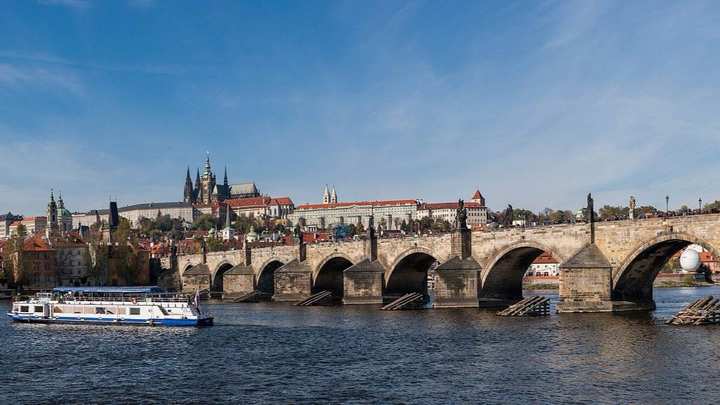
Why the Czech Republic
The Czech Republic is the central-European nomad pick that quietly delivers Berlin-quality city life at Lisbon-or-cheaper prices. Prague is one of Europe's most cinematic cities: preserved medieval old town, Art Nouveau boulevards, café culture going back two centuries. The Živnostenské oprávnění (Zivno) trade-license visa is the established route for freelancers and consultants. Schengen access, EUR-adjacent cost of living, and a fiber network that's genuinely among Europe's best.
Who it suits. The freelance developer, designer, consultant or marketer who wants a real Schengen base at a price-point well below Western European capitals. The couple looking for a year of beer-and-bread-and-castle weekends across central Europe. The English-speaker who's heard Czech is hard and is right but can still survive in Prague's tech-bubble in English.
Who it doesn't. People who hate winter: Prague gets cold and grey from November to March. People needing Asian-time-zone alignment. And anyone allergic to bureaucracy: the Zivno process is real paperwork, mostly in Czech, with a separate trade-license registration step.
The visa, in plain English
Czech Republic runs two practical remote-worker routes. The Zivno is the headline freelance route. The Employee Card is the standard employed-worker option but requires a Czech employer.
Živnostenské oprávnění (Zivno): Long-term Business Visa
- Eligibility. Non-EU/EEA national working as a freelancer, consultant, or sole-proprietor in a recognised trade (volná živnost, ohlašovací řemeslná, etc.). Most tech / consulting / creative work falls under "free trade" (volná živnost) and needs no special qualification.
- Income evidence. Show CZK 124,500 (~$5,500 USD) in savings on the application AND a business plan + 1–2 client contracts demonstrating realistic monthly income. Most successful applications show €1,500–2,500/month in client invoices.
- Length. Long-term Business Visa for up to 12 months, convertible to a 2-year residence permit after arrival. Renewable. After 5 years of continuous residence you can apply for permanent residence; after 10, citizenship.
- Where to apply. At the Czech embassy or consulate in your home country (typically not in Czech Republic). Some applicants submit through VFS centres. Processing: 4–12 weeks, longer at popular consulates (London, NY, Sydney).
- Documents. Passport, criminal background check (apostilled), proof of accommodation in Czech Republic, business plan, savings proof, valid health insurance covering the full visa period, ~CZK 5,000 (€200) application fee, plus the trade-license fee (CZK 1,000, ~€40).
- Tax. 183+ days makes you Czech tax-resident on worldwide income. Czech personal income tax is 15% flat up to ~CZK 1.6M/year (~$70k), then 23% above. With Zivno status you can elect the favourable "60/40 paušál" lump-sum expense regime: 60% of revenue treated as deductible expenses for income tax purposes (i.e., effective tax of 15% × 40% revenue = 6% of gross revenue). It's the structural reason Zivno is popular.
Employee Card (the corporate-employee route)
- Eligibility. Foreign national with a Czech employer offering a contract above the minimum-wage threshold. Combined work + residence permit.
- Why nomads skip it. Requires a Czech employer. Best for relocators.
Reviewed in May 2026. Visa rules change. Confirm with the official source: mvcr.cz (Ministry of the Interior) and mzv.gov.cz (Ministry of Foreign Affairs) before applying.
Cost of living
Prague is the most expensive Czech city: central 1BRs in Vinohrady, Karlín, Žižkov run CZK 25,000–40,000 ($1,090–1,750). Brno (the country's second city) is 30–40% cheaper. Smaller cities (Olomouc, Plzeň, České Budějovice) are half Prague's price.
Solo nomad in Prague (Vinohrady / Karlín), monthly:
- Rent. Furnished 1BR central: CZK 25,000–38,000 ($1,090–1,660)
- Groceries (Albert, Billa, the Holešovice market): CZK 6,500–9,500 ($285–415)
- Transit (Prague DPP monthly): CZK 550 ($24), among Europe's cheapest
- Coworking (Opero, Hub, Locus Workspace, hot desk): CZK 5,500–8,500 ($240–370)
- Eating out (Czech pub lunch + 3 nicer dinners): CZK 7,500–11,000 ($330–480)
- Gym (BodyBody, Holmes Place): CZK 1,200–2,200 ($55–95)
- Entertainment (Prague State Opera, weekend trips, beers): CZK 3,500–5,500 ($155–240)
- Total: ~$1,800 USD / month
Swipe to compare →
Health insurance is mandatory for the visa. Private (PVZP, Maxima, Slavia) runs CZK 1,500–4,000/month ($65–175 USD) for comprehensive cover. Public VZP kicks in if you contribute via Czech employment. Motol University Hospital (Prague) and St. Anne's (Brno) are top-tier.
Internet & connectivity
Czech connectivity is genuinely among Europe's best. O2 Czech Republic, T-Mobile CZ, Vodafone CZ push 500 Mbps–1 Gbps fiber to most Prague and Brno addresses for CZK 500–800/month ($22–35 USD). Median fixed download is around 100 Mbps per the Speedtest Global Index. Mobile 5G blankets Prague, Brno, Ostrava and most highway corridors.
Café coworking is real in Prague's Vinohrady (Café Lounge, Coffee Source), Karlín (EMA, Můj šálek kávy), Žižkov (Lukulus), and Brno's Old Town (KOPEČEK, Mitte). Fast Wi-Fi, plug points, and a culture that tolerates laptops for hours.
The thing nobody tells you about a Czech year. You bounce around Schengen. Prague → Vienna for a long weekend, Brno → Budapest for the harvest, ICE to Berlin, train to Krakow. Each trip tempts you into a new local SIM. Each new SIM means a new Czech number. Which means your bank's 2FA code lives on a SIM in a Vinohrady drawer while you're at a Hungarian thermal bath.
Ringo's answer for the data is the Czechia eSIM at the top of this guide: a prepaid plan, unlimited data at full speed for 7 days, 2 weeks, 30 days or 90 days, from $5.99, by email in seconds and installed next to the SIM you already have. Your number stays on your own SIM, so calls, SMS and the bank's codes keep landing where they always did; the eSIM only carries the data. Moving on after Czechia? The Europe plan (33 countries), the Europe Power Use plan (33 countries) and Global (133 countries) run on one eSIM and sit a tap away above the card. The full Ringo service, one plan that works everywhere with your own number ported, is still being built; every plan bought here funds it.
Where to live
- Prague. Vinohrady. The classic expat ZIP: leafy, walkable, café-dense, Belle Époque buildings. CZK 27,000–40,000 ($1,180–1,750) for a furnished 1BR. Best for: first-timers and longer stays.
- Prague. Karlín. The rebuilt-after-2002-flood creative quarter. Design studios, third-wave coffee, river-walk. CZK 28,000–42,000 ($1,225–1,830). Best for: design and tech crowd.
- Prague. Žižkov. Bohemian, edgier, cheaper. The TV-tower district with the highest density of pubs in Europe. CZK 22,000–32,000 ($960–1,400). Best for: 2nd-year residents and night-life-first nomads.
- Brno. The Czech tech-and-university second city. Smaller (380k), cheaper, surprisingly café-dense, walking distance to everything. CZK 15,000–24,000 ($655–1,050). Best for: longer stays and budget-conscious nomads.
- Olomouc / Plzeň. University towns with thinning nomad communities but great quality of life and half-Prague prices. CZK 10,000–18,000 ($435–790). Best for: deep cost-savings 6+ month stretches.
Coworking & community
Coworking spaces worth a desk:
- Opero. Prague (Národní třída, Karlín). Premium chain, frequent events. ~CZK 6,500/month ($285) hot desk.
- Hub OutLoud. Prague. Community-focused, design-led. ~CZK 5,500/month.
- Locus Workspace. Prague (Smíchov). The OG Prague expat coworking. ~CZK 5,000/month.
- Scott.Weber Workspace. Prague + Brno + Bratislava. Corporate-grade, dependable. ~CZK 6,000/month.
- Spaces / Regus. Prague (multiple) + Brno. ~CZK 6,500/month.
- Impact Hub Prague / Brno. The startup-and-social-impact anchor. ~CZK 4,500/month.
Communities worth joining day one:
- Nomad List Prague. Paid, most active for short-term arrivals.
- Prague Tech Meetup. Weekly events, real engineers.
- Expats in Prague on Facebook (75k+). The visa-question + apartment-listings firehose.
Practical setup
- Banking. Komerční banka, Česká spořitelna and Air Bank are the foreigner-friendly defaults. Revolut works as a daily account; for the Czech bureaucracy you'll often need a local CZK IBAN.
- IČO (business ID). Issued when you register your Zivno trade license at the Trade Licensing Office (Živnostenský úřad). Required for invoicing. ~CZK 1,000 (€40) fee.
- DIČ (tax ID). Issued automatically after IČO is registered. Required for VAT once your annual revenue exceeds CZK 2M (~$87k).
- Healthcare. Private insurance (PVZP, Maxima, Slavia) at CZK 1,500–4,000/month is the standard. Once you contribute to public VZP via Czech employment, the system kicks in. Motol Prague is the largest hospital in Central Europe.
- Tax: the 60/40 paušál. The headline reason Zivno is popular. Elect this lump-sum-expense regime via your Steuerberater (Czech: daňový poradce) and only 40% of your gross revenue is treated as taxable income, at 15%, so the effective tax rate is roughly 6% of gross.
- Accommodation platforms. Sreality for long-term Czech listings. Bezrealitky for direct owner-rented (no agent fee). For furnished short-term: monthly Airbnb, Flatio, and Facebook "Prague Apartment Hunt" group.
Useful links
- mvcr.cz. Ministry of the Interior (residence permits).
- mzv.gov.cz. Ministry of Foreign Affairs (consular network).
- financnisprava.cz. Czech Tax Administration.
- rzp.cz. Trade Licensing Register (IČO lookup).
- vzp.cz. Public health insurance.
- coworker.com. Searchable directory.
- nomadlist.com/czech-republic. Costs, ratings, member chat.
The honest downsides
- Language. Czech is hard: different alphabet conventions, 7 cases, no real cognates with major languages. English works in Prague's tech bubble; everywhere else (and every government office) it's Czech.
- Bureaucracy. The Zivno + visa + Anmeldung-equivalent + tax registration is a real paperwork stack. Most foreigners use a local agency (~CZK 8,000–20,000, $350–870) to compress the timeline.
- Winter darkness. November–February is grey, snowy, and short-day. Prague gets cold (regularly below freezing). Plan around it.
- Tourist density in central Prague. Old Town is unliveable for residents 9 months of the year. Live in Vinohrady, Karlín or Žižkov instead.
- Trade-license tax category interpretation. The 60/40 paušál has been periodically tweaked. Confirm the current rates and revenue cap with a Czech accountant before structuring around it.
A 30-day on-arrival checklist
- Day 1–3. Move into your first apartment. Get a copy of the rental contract and the landlord's confirmation for the residency application.
- Day 3–7. Register your Zivno trade license at the local Živnostenský úřad. CZK 1,000 (€40), takes one visit, you get an IČO immediately.
- Week 2. Submit your long-term visa/residence permit application at the Ministry of the Interior (MV ČR) regional office. Decision: 4–8 weeks for the residence permit conversion.
- Week 2. Put the data on an eSIM, not a local prepaid. An O2 or T-Mobile CZ prepaid comes with a new Czech number you will outgrow the moment you train to Vienna. The Czechia data eSIM at the top of this guide installs in one scan and runs next to your own SIM, so your bank, your daňový poradce and your codes keep reaching the number you already have.
- Week 2. Pick a coworking. Opero or Locus in Prague; Impact Hub Brno if you're south.
- Week 3. Open a Czech bank account at Komerční banka, Air Bank or Česká spořitelna. The Czech IBAN is useful for utilities and rentals.
- Week 3. Buy private health insurance from PVZP, Maxima or Slavia. Mandatory for the residence permit.
- Week 4. Find your hospoda (the neighbourhood pub), your café notable, your Prague Castle viewpoint, your favourite weekend trip (Český Krumlov, Karlovy Vary). The point of the year isn't the visa. It's the life you build inside it.