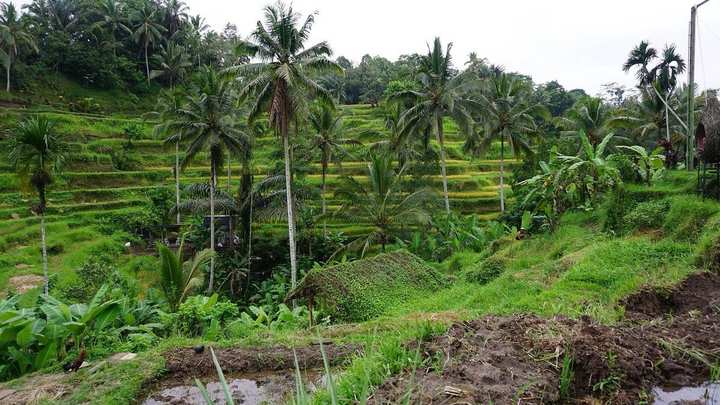
Why Indonesia
Indonesia is the country a generation of remote workers learned about from a coworking video shot in Canggu. Year-round 28°C, surf you can paddle out to in your lunch break, $4 nasi campur, oceanfront laptops, and a community so dense that day-one arrivals can find a sunset run, a Brazilian-jiu-jitsu class, and three friends by Friday. In May 2024 Indonesia formalised what Bali had been doing on tourist stamps for a decade: a dedicated remote-worker KITAS (the E33G) that lets you live legally for up to a year on foreign income.
Who it suits. The engineer or designer earning USD/EUR salary who wants their money to stretch 3–4× without leaving an English-speaking nomad bubble. The yoga-and-surf crowd whose calendar already runs on island time. The early-stage founder building a remote team who can finally hold a 9am call with EU and a 9pm call with the US Pacific coast in the same workday.
Who it doesn't. People who need fast bureaucracy. Or fast anything outside the coworking. People who can't tolerate humidity, occasional dengue scares, and the daily reality that the power and the internet both go out at least once a month. People who need a real winter, fresh dairy, or a city that doesn't run on motorbikes.
The visa, in plain English
Indonesia runs three routes a remote worker will actually use. The 2024 E33G is the headline one, but the older B211A still has a place, and the Second Home Visa is what the high-net-worth crowd quietly takes.
E33G. Remote Worker KITAS (the new headline route)
- Eligibility. Employed by, or contracting with, a company established outside Indonesia. All income must be foreign-sourced. You cannot legally work for, invoice, or take payment from any Indonesian client or entity while on the E33G.
- Income. Annual income of at least USD $60,000 (or local-currency equivalent), evidenced by 12 months of payslips or contracts. Plus a minimum USD $2,000 personal bank balance shown across the last three statements.
- Length. Up to 12 months, multi-entry. Extendable for a second year under current practice.
- Documents. Valid passport (18+ months remaining), the remote-employment letter or contracts, the 3-month bank statements, recent passport photo, proof of accommodation in Indonesia. The KITAS card is collected in-country at an Imigrasi office.
- Processing. Around 2–4 weeks for the electronic approval; you then enter Indonesia and complete the in-country biometrics and KITAS card collection in 7–14 days.
- Family. Spouse and dependent children can be added as dependants. Each dependant has their own document set; the principal applicant's income still drives the threshold.
- Tax. If you spend more than 183 days in any 12-month period in Indonesia you become a tax resident on worldwide income. The DGT has tightened foreign-income reporting since April 2026, so assume you will need to file an Indonesian tax return for any year you cross the threshold.
B211A. Visit / business visa (the bridge route)
- Eligibility. Tourist or business visitor, not formally a remote-worker visa. Issued for 60 days, extendable up to 180 days total (60 + 60 + 60).
- Where it fits. The honest answer is what most pre-2024 nomads used. It is still the simplest route for a 3–6 month trial. Strictly speaking, "working" remotely on a B211A sits in a grey zone tolerated in practice. If you plan to stay more than 6 months, switch to the E33G.
Second Home Visa (E33F). The high-net-worth route
- Eligibility. Show roughly IDR 2 billion (about USD $130,000) in an Indonesian state bank, or own qualifying property. Grants 5 or 10 years of residence with full multi-entry.
- Where it fits. The deposit-route version of a long-stay visa. Mostly used by retirees, investors, and remote workers who don't want to renew anything for half a decade.
Reviewed in May 2026. Visa rules change. Confirm with the official source: evisa.imigrasi.go.id (Indonesian Directorate-General of Immigration e-visa portal) and imigrasi.go.id before applying. Use a licensed agent for the E33G if it's your first time. Indonesian immigration paperwork rewards local hands.
Cost of living
Bali is no longer the $700-a-month destination it was in 2015. Canggu in particular has caught up to the realities of a global nomad market. But the math still works if you compare it to what you'd pay for a comparable lifestyle in Lisbon, Mexico City, or Cape Town. The headline numbers below are for a mid-range solo nomad in Canggu. Ubud runs 15–20% cheaper, Uluwatu and Sanur sit in the middle, and Jakarta is its own story (cheaper rent, much more traffic).
Solo nomad in Canggu, monthly:
- Rent. Modern 1-bed villa with pool, Berawa or Pererenan: $650–1,100
- Scooter rental + petrol: $80–110
- Groceries (Pepito, Bali Buda, the morning market): $200–280
- Coworking (Outpost, Tropical Nomad, BWork. Hot desk): $120–200
- Eating out (warungs at $3–5, brunch spots at $8–14): $280–380
- Gym / yoga / surf coaching: $60–120
- Health insurance (international, $1M cover): $80–140
- Entertainment (sunset bars, day trips, occasional Java escape): $120–180
- Total: ~$1,500 USD / month
Swipe to compare →
Healthcare in Bali is a two-tier reality. Public BPJS Kesehatan is cheap (under $25/month) but most nomads stay on international cover (SafetyWing, Cigna Global, or Allianz at $80–140/month) because the trusted hospitals (BIMC Nusa Dua, Siloam Kuta, Sanglah Denpasar) bill in dollars at international rates. For anything serious, Singapore is a 2.5-hour flight and a non-negotiable destination.
Internet & connectivity
The headline median speed of around 35 Mbps understates the lived reality for a nomad. Most Canggu and Ubud villas now ship with IndiHome or BizNet fiber at 100–300 Mbps. Every serious coworking is wired with redundant lines and a generator. Mobile coverage from Telkomsel is the gold standard: 4G+ blankets every meaningful nomad area, and 5G is live across central Jakarta, Surabaya, Bali, Bandung, Medan, and Batam as of 2024.
What does bite: PLN power cuts (usually 30–90 minutes, several times a month in the rainy season), thunderstorm-driven fiber outages, and the global undersea-cable incidents that occasionally drop the entire SE-Asia route for a few hours. Every long-stay nomad here learns to keep a mobile hotspot as a backup the way Lisbon nomads keep an umbrella.
The thing nobody tells you about Bali. The local SIM is cheap (Telkomsel Halo at IDR 200k/month for 50 GB), but the number you get on it is a Telkomsel prepaid number that you'll lose the next time you bounce to Lombok, Java, Singapore, or Bangkok. Every move means a new SIM, a new number, and another round of "I changed my number" emails to your bank, your accountant, and your 2FA settings. Real WhatsApp accounts are tied to a number. Lose it and you lose the chat history with your client.
Ringo's answer for the data is the Indonesia eSIM at the top of this guide: a prepaid plan, unlimited data at full speed for 7 days, 2 weeks or 30 days, from $6.99, by email in seconds and installed next to the SIM you already have. Your number stays on your own SIM, so calls, SMS and the bank's codes keep landing where they always did; the eSIM only carries the data. Moving on after Indonesia? The Asia plan (20 countries) and Global (133 countries) run on one eSIM and sit a tap away above the card. The full Ringo service, one plan that works everywhere with your own number ported, is still being built; every plan bought here funds it.
Where to live
- Canggu. Berawa / Pererenan. The nomad capital of the planet. Modern villas, oceanfront cafes, every coworking on Earth opened a branch. $700–1,300 for a 1-bed villa with pool. Best for: first-timers, surfers, people who want a built-in social life.
- Ubud. The yoga-and-rice-fields version. Quieter, greener, slower. $500–950 for a villa. Best for: writers, anyone deeper into the wellness world, second-year Bali residents who outgrew Canggu's traffic.
- Uluwatu / Bukit Peninsula. The cliff-tops south of Kuta. Big-wave surf, sunset bars, dramatically beautiful, low food density. $600–1,100. Best for: surf-led nomads who don't mind cooking more nights at home.
- Sanur. The old-school east coast. Calmer, more families and retirees, fewer scooters, easier ageing. $500–900. Best for: people who want Bali without the Canggu intensity.
- Jakarta. Menteng / SCBD. The skyline, the corporate scene, real winter wardrobes. A different country in feel. $700–1,400 for a serviced apartment. Best for: nomads with Indonesian clients or partners, anyone who finds Bali too monocultural.
Coworking & community
Coworking spaces worth a desk:
- Outpost. Canggu, Ubud, Penestanan. The biggest network in Bali. Combined co-working + co-living memberships from $250/month.
- Tropical Nomad. Canggu. The Berawa social hub. Strong events calendar, good Wi-Fi, killer breakfast. $180/month hot desk.
- Dojo Bali. Canggu. The OG. 24/7 access, pool, hammocks. $145/month basic, $230 unlimited.
- BWork Bali. Canggu. The dependable mid-tier with reliable backup power. $130/month.
- Hubud. Ubud. The bamboo space that put Ubud on the nomad map a decade ago. $120/month.
- GoWork. Jakarta (Pacific Place, Plaza Indonesia, more). The corporate-grade Jakarta option for client meetings. $200–320/month.
Communities worth joining day one:
- Nomad List Bali. Paid, but the highest-signal chat for short-term Canggu and Ubud arrivals.
- Canggu Meetup. Free events, mostly business and wellness.
- Canggu Community on Facebook (80k+). The Bali-housing and where-to-eat firehose.
Practical setup
- Banking. Most nomads run on Wise and Revolut for foreign-currency holdings, plus a local Indonesian account once they have a KITAS. Permata Bank and Bank Jago are the standard recommendations for foreigners (Bank Jago is fully app-native).
- NPWP (tax ID). Required if you become tax resident (183+ days). Apply at the local KPP office in person with your KITAS. Free, takes one visit.
- Healthcare. Keep an international plan for serious incidents (SafetyWing, Cigna Global, Allianz). Add BPJS Kesehatan once your KITAS is active for routine primary care.
- Driving. An IDP (International Driving Permit) issued in your home country covers scooters and cars for visitors. Locally-issued SIM A (car) or SIM C (motorbike) needs a test and is straightforward once you have a KITAS.
- Tax residency. The 183-day rule applies. Cross it and you owe Indonesian tax on worldwide income. The DGT tightened reporting in April 2026, so assume you'll need to file. Talk to TaxPrime or Emerhub before your first deadline.
- Accommodation platforms. Airbnb for short-stay trials. For monthly: Flokq (Jakarta), the Canggu Community Facebook group, and walking the streets with the agent of whichever villa you spot a "for rent" sign on. Direct deals beat platforms in Bali.
Useful links
- evisa.imigrasi.go.id. Official e-visa portal (B211A, E33G, all categories).
- imigrasi.go.id. Directorate-General of Immigration (the agency behind the KITAS).
- pajak.go.id. Directorate-General of Taxes (DGT). NPWP, tax filings, 2026 foreign-income reporting rules.
- bpjs-kesehatan.go.id. Indonesian public health insurance.
- bimcbali.com. BIMC Hospital (the international hospital network in Bali).
- coworker.com (Indonesia). Searchable directory with reviews.
- nomadlist.com/bali. Costs, ratings, member chat.
- nomadlist.com/jakarta. The Jakarta-specific feed.
The honest downsides
- Bureaucracy. The E33G is workable, but the process rewards using a licensed agent. DIY applications get stuck on translation, document order, and KITAS card collection appointments. Budget $400–900 for an agent if it's your first time.
- Power and internet. Outages are a fact of life. Plan for a few unscheduled hours offline a month. Keep a Telkomsel mobile hotspot as a backup.
- Traffic and scooter safety. Bali's roads have one of the higher tourist-scooter accident rates anywhere. Wear the helmet, don't ride after drinks, ride sober at night, get the international plan with evacuation cover.
- Tax 2026. The DGT has been actively tightening foreign-income reporting from April 2026. Crossing 183 days now reliably triggers an obligation to file. The "live in Bali on a tourist visa and never file anything" era is closing.
- Bali burnout. The community is intense. Constant socialising, constant arrivals and departures, constant short conversations. People who stay long-term either move to Ubud, Sanur, or Uluwatu, or take a real break in Lombok every few months.
- The waste reality. Tourism plus monsoon plus inadequate processing infrastructure equals a visible plastic problem on certain beaches in the wet season. The Pererenan and Berawa beach cleans are real volunteer efforts worth showing up for.
A 30-day on-arrival checklist
- Day 1–3. Collect your KITAS card at the local Imigrasi office (the appointment is set in your e-visa approval). Get the biometrics done. Make 5 colour photocopies of the card; you will need them.
- Day 3–7. Open a local bank account at Permata or Bank Jago using your KITAS + passport. Useful for paying villa landlords in IDR.
- Week 2. Lock in your accommodation for at least 3 months. Bali run-rates jump 20–35% above the 1-month price for short-stays.
- Week 2. Put the data on an eSIM, not a local prepaid. A Telkomsel prepaid comes with a new Indonesian number you will lose the moment you bounce to Lombok or Singapore. The Indonesia data eSIM at the top of this guide installs in one scan and runs next to your own SIM, so your bank, your WhatsApp and your codes keep reaching the number you already have.
- Week 2. Pick a coworking. The 1-month commitment is your social network for the duration of your stay.
- Week 3. Apply for NPWP if you'll cross 183 days. Visit the local KPP office in person with KITAS.
- Week 3. If you'll ride: rent a scooter through a coworking-vetted vendor, not a beachfront kiosk. Confirm the international plan + evacuation cover is active before the first ride.
- Week 4. Find your warung, your morning surf, your favourite sunset spot, your gym. The point of the year isn't the visa. It's the life you build inside it.