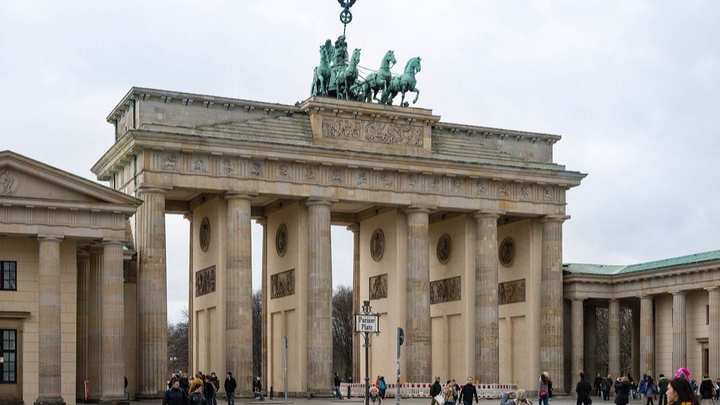
Why Germany
Germany is the EU country where a remote worker who actually wants to settle, not just nomad, gets the longest runway. The Freiberufler visa (freelancer / liberal-professions residence) gives independent contractors a real 3-year residence card with full Schengen access. Berlin is the most internationalised tech-and-design hub on the continent, Munich is the corporate-and-engineering capital, Hamburg is the underrated quiet pick, Cologne is the friendliest. EU passport after 8 years (5 with proven C1 German). Public healthcare, public transit, public childcare: everything the post-Soviet bargain doesn't include.
Who it suits. The freelance designer, developer or consultant who wants the longest stable EU base on the market. The founder building an EU-or-DACH-focused business who needs Germany as a launching pad. The couple looking for a real life with public healthcare, kindergartens, libraries, parks, and a 2-hour ICE to Paris or Amsterdam. The English-speaker who can survive 18 months of A2 German and still bank, doctor, and rent in English.
Who it doesn't. People allergic to bureaucracy: Germany invented modern paperwork. People expecting fast internet outside the major cities (median 90 Mbps is real, but rural fiber is genuinely behind). And anyone who needs a year-round warm climate: Berlin grey from October to April is not a metaphor.
The visa, in plain English
Germany runs three practical routes for remote workers. The Freiberufler / Künstlervisum is the headline freelance route. The Selbständige is the entrepreneur cousin. The EU Blue Card is the employee version for high earners with German employers.
Freiberufler visa (the headline route)
- Eligibility. Non-EU national working as a freelancer in one of the recognised "freiberuflich" professions: tech, design, journalism, teaching, translation, science, the arts, consulting, medicine, law. Different from a small-business owner (Gewerbetreibender). Freiberufler status has tax and admin benefits.
- Income evidence. No fixed monthly minimum, but you must show convincing evidence of income or contracts (typically €2,500–4,000/month equivalent). 2–3 client letters of intent or contracts, a business plan, recent bank statements, and proof of accommodation in Germany.
- Length. Initial visa is 3-year residence permit (Aufenthaltserlaubnis). Renewable. After 5 years of contributing to German social security (or 3 with C1 German) you can apply for permanent residence (Niederlassungserlaubnis). After 8 years, EU passport eligibility.
- Where to apply. Either (a) at the German embassy or consulate in your home country before arrival, OR (b) on a Schengen tourist stamp inside Germany at the local Ausländerbehörde. The in-country route is harder than it used to be. Most Auslanderbehörden now require entry on a national visa.
- Documents. Passport, biometric photos, registered Anmeldung (address registration), German health insurance proof (mandatory, €300–700/month for private), letters of intent / contracts from 2+ clients, business plan with revenue projection, tax forecast certified by a Steuerberater (~€300–600), recent bank statements, fee €100.
- Family. Spouse / partner can join under family-reunion rules and gain work rights. Children under 16 don't need German-language proof; older dependants must show A1 German.
- Tax. If you spend 183+ days in Germany, you become German tax-resident on worldwide income. Income tax 14–45% progressive, plus 5.5% solidarity surcharge (in many cases), plus 8–9% church tax if you register a religion. Freiberufler pay no trade tax (Gewerbesteuer), one of the structure's perks.
Selbständige visa (the entrepreneur cousin)
- Eligibility. Self-employed in a non-liberal-profession (e.g., import-export, hospitality, agency). Higher capital threshold and a stronger business-plan requirement.
EU Blue Card (the employee route)
- Eligibility. Foreign passport holder with a German employer offering a salary above €43,759 in 2026 (lower for shortage occupations like IT, engineering, science). Path to permanent residency after 33 months (21 with B1 German).
- Why nomads sometimes skip it. Requires a German employer. Best fit for relocators, not freelancers.
Reviewed in May 2026. Visa rules change. Confirm with the official source: auswaertiges-amt.de (Federal Foreign Office) and your nearest BAMF (Federal Office for Migration and Refugees) office before applying.
Cost of living
Berlin remains the cheapest major German city: central 1BRs run €1,000–1,500. Munich is the priciest (€1,400–2,200 central). Hamburg and Cologne sit in the middle. Outside the top 5 cities (Berlin, Munich, Hamburg, Frankfurt, Köln), rents drop a further 25–40%.
Solo nomad in Berlin (Mitte / Prenzlauer Berg / Kreuzberg area), monthly:
- Rent. Furnished 1BR central: €1,000–1,500
- Groceries (REWE, Edeka, the Wochenmarkt): €280–380
- Transit (BVG monthly Deutschland-Ticket): €58
- Coworking (Mindspace, Factory, hot desk): €220–320
- Eating out (Imbiss lunch + 3 dinners + cafés): €280–420
- Gym (McFit, FitX, Urban Sports Club): €30–80
- Entertainment (museums with Berlin Pass, bars, weekend Brandenburg): €180–280
- Total: ~€2,200 / $2,400 USD / month
Swipe to compare →
Health insurance is mandatory for the visa. Private (PKV) for freelancers runs €300–700/month depending on age and coverage tier; public (GKV) for freelancers via TK or AOK runs €350–900/month. Charité Berlin, LMU Klinikum Munich, UKE Hamburg are top-tier public university hospitals.
Internet & connectivity
Germany has surprisingly mid-tier fixed internet for a G7 country. Deutsche Telekom, Vodafone, 1&1, O2 push 100–500 Mbps DSL/cable in most cities, with full fiber rolling out unevenly (faster in Munich, Hamburg; slower in Berlin and the smaller cities). Median fixed download nationally hovers around 90 Mbps per the Speedtest Global Index. Mobile 5G covers every major city and the Autobahn corridors; Deutsche Bahn Wi-Fi on the ICE is real but variable.
Café coworking is real and dense in central Berlin (Café Liebling, The Barn, Father Carpenter), in central Munich (Man versus Machine, Misciu), and in every Hamburg / Cologne / Frankfurt creative quarter. Most have fast Wi-Fi and plug points; the German laptop-at-café culture is fully normalised post-2020.
The thing nobody tells you about a German year. You'll travel constantly. Berlin → Vienna for a long weekend, Munich → Salzburg for the Alps, ICE to Amsterdam, weekend to Prague. Each trip tempts you into a new local prepaid SIM, which means a new German number. Which means your bank's 2FA code (and Germany loves SMS-based 2FA) lives on a SIM in a drawer in Kreuzberg while you're in Vienna.
Ringo's answer for the data is the Germany eSIM at the top of this guide: a prepaid plan, unlimited data at full speed for 3 days, 2 weeks, 30 days or 90 days, from $8.99, by email in seconds and installed next to the SIM you already have. Your number stays on your own SIM, so calls, SMS and the bank's codes keep landing where they always did; the eSIM only carries the data. Moving on after Germany? The Europe plan (33 countries), the Europe Power Use plan (33 countries) and Global (133 countries) run on one eSIM and sit a tap away above the card. The full Ringo service, one plan that works everywhere with your own number ported, is still being built; every plan bought here funds it.
Where to live
- Berlin. Prenzlauer Berg / Mitte / Kreuzberg. The classic expat ZIPs. Walkable, café-dense, U-Bahn access. €1,200–1,700 for a furnished 1BR. Best for: first-timers, tech-and-design crowd, anyone working English-language roles.
- Berlin. Neukölln / Friedrichshain. Cheaper, edgier, faster-changing. €900–1,300. Best for: 2nd-year residents, artists, people who'd rather be in the scene than near it.
- Munich. Schwabing / Isarvorstadt / Glockenbach. The premium pick. Beer-garden walkable, Englischer Garten on your doorstep. €1,500–2,200. Best for: corporate / finance / engineering nomads.
- Hamburg. Sternschanze / St. Pauli / Eimsbüttel. Maritime city, more relaxed than Berlin, design-and-media focus. €1,100–1,600. Best for: people who prefer Northern Europe to Southern.
- Leipzig. Berlin's cheaper cousin, growing tech scene. €700–1,100 for a central 1BR. Best for: budget-conscious longer stays with weekend Berlin trips.
Coworking & community
Coworking spaces worth a desk:
- Factory Berlin. Mitte + Görlitzer Park. Startup community + coworking + events. Application-based for the deeper community; hot desks open to anyone. ~€300/month.
- Mindspace. Multiple Berlin + Munich + Frankfurt locations. The premium design-led chain. ~€330/month hot desk.
- WeWork Berlin / Munich. Corporate-grade with EU-wide membership. ~€350/month.
- Spaces / Regus. Every major German city, dependable. ~€260–330.
- Betahaus. Berlin (Kreuzberg). The OG Berlin coworking, founder community. ~€260/month.
- Basislager Leipzig. Leipzig's coworking anchor. ~€180/month.
Communities worth joining day one:
- Nomad List Berlin / Munich. Paid, the most active community for short-term arrivals.
- Berlin Tech Meetup. Weekly events across the city, free.
- Expats in Berlin on Facebook (200k+). The visa / Anmeldung / Mietvertrag firehose.
Practical setup
- Banking. N26, DKB, Consorsbank, and ING-DiBa are the foreigner-friendly online-first defaults. Sparkasse and Deutsche Bank are the legacy in-person options. SEPA + Girocard is the local payment rail; many smaller shops are still card-only and some are cash-only (Germany loves cash).
- Anmeldung (address registration). The single most important early step: you can't do anything else until you have an Anmeldung. Book a Bürgeramt appointment within 14 days of moving in. The "Anmeldebestätigung" certificate unlocks bank, tax ID, visa application, phone contracts, everything.
- Steuer-ID (tax ID). Issued automatically after Anmeldung and mailed in 2–4 weeks. Required for any income.
- Healthcare. Mandatory: visa won't issue without it. PKV (private) at €300–700/month is the standard freelance choice. GKV (public) via Techniker Krankenkasse, AOK, or Barmer runs €350–900/month for freelancers. International expat plans (Cigna, Allianz Care) generally don't satisfy German requirements, so get a German-compliant policy.
- Tax. Hire a Steuerberater (~€500–1,200/year for freelancers). They'll handle quarterly VAT (Umsatzsteuer), the annual income tax return, and the Freiberufler / Gewerbesteuer questions. Doing it yourself in German is possible but rarely worth the time.
- Accommodation platforms. ImmoWelt, ImmobilienScout24, WG-Gesucht (the flat-share standard). Long-term unfurnished is the cheap path but requires Schufa credit check + 3-month deposit + landlord interviews. Furnished short-term: Coliving, Homelike, monthly Airbnb.
Useful links
- auswaertiges-amt.de. Federal Foreign Office (visa categories, consulate network).
- bamf.de. Federal Office for Migration and Refugees.
- elster.de. German tax authority online portal.
- tk.de. Techniker Krankenkasse (largest public insurer).
- coworker.com (Germany). Searchable directory.
- nomadlist.com/germany. Costs, ratings, member chat.
The honest downsides
- Bureaucracy is real. Anmeldung appointments in Berlin run 4–8 weeks out. Every official letter is in German. Every official process expects you to physically show up with paperwork. Hire a relocation agent (~€500–1,500) if you're under time pressure.
- Weather. October to April in Berlin gets 6–8 hours of grey daylight. People underestimate it; some leave after one winter. A SAD lamp + a real winter coat are non-optional.
- Cash culture. Despite the engineering reputation, many German cafés, bars, doctors and small shops are cash-only. Carry €40–80 always.
- Language. English works in Berlin's tech bubble and at every major coworking. Outside that, German is non-optional for any government interaction. The C1 German requirement for fast-track residency is real and takes 12–24 months of serious study.
- Internet outside cities is mid-tier. Rural fiber rollout is genuinely behind. Pick your city carefully if you'll move outside the top 5.
A 30-day on-arrival checklist
- Day 1–3. Move into your first apartment (Airbnb or furnished if possible). Get the landlord's "Wohnungsgeberbescheinigung", the confirmation form required for Anmeldung.
- Day 1–7. Book your Anmeldung appointment at the local Bürgeramt online. Slots fill 4–8 weeks ahead in Berlin. If no appointments, walk into the Bürgeramt on opening morning (7:30 am) for a Notfall walk-in.
- Week 2. Once Anmeldebestätigung in hand, open a German bank account at N26, DKB or Consorsbank online. The card arrives in 5–10 days.
- Week 2. Submit Freiberufler visa application at the Ausländerbehörde. Bring Anmeldebestätigung, client letters, health insurance, business plan, Steuerberater forecast.
- Week 2. Put the data on an eSIM, not a local prepaid. A Telekom or Vodafone prepaid comes with a new German number you will outgrow the moment you take the ICE to Vienna. The Germany data eSIM at the top of this guide installs in one scan and runs next to your own SIM, so your bank, your Steuerberater and your codes keep reaching the number you already have.
- Week 3. Pick a Krankenkasse (public TK / AOK / Barmer) OR a PKV broker if you're going private. Submit the membership application.
- Week 3. Get the Deutschland-Ticket (€58/month for unlimited public transport across Germany). Install BVG / MVG / HVV app for your city.
- Week 4. Find your Späti, your Wochenmarkt, your favourite Bar, your morning bakery (Brötchen, every day). The point of the year isn't the visa. It's the life you build inside it.