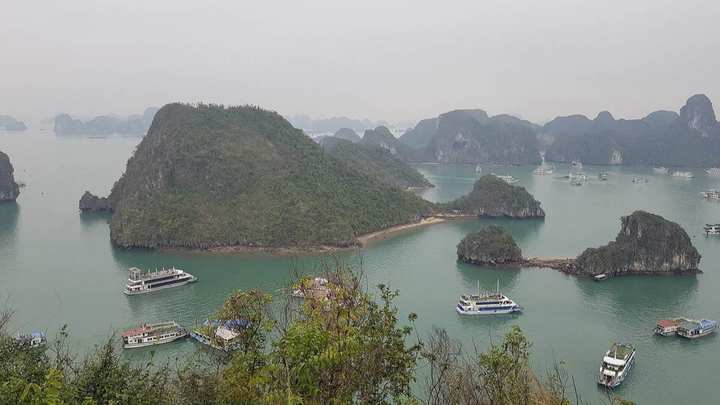
Why Vietnam
Vietnam is the SE Asian country where the costs of 2015 Bali still exist and the food is the food. No dedicated Digital Nomad Visa, but the 90-day e-visa (extended from 30 days in 2023) makes Vietnam genuinely viable for nomads who can border-run quarterly. Da Nang is the rising nomad city: Pacific beach, walkable old town nearby (Hoi An), tech-and-coworking-and-café scene that exploded post-2022. Ho Chi Minh City is the entrepreneurial capital. Hanoi is the cultural one. The dong is exceptionally weak, so a USD nomad lives well on $1,000–1,500/month.
Who it suits. The budget-conscious remote worker who wants Asia at 2015 prices. The pho-and-bánh-mì obsessive. Couples doing a year-long SEA rotation with Vietnam as the longest stop. Single freelancers earning $30–80k who can stretch each dollar dramatically.
Who it doesn't. People needing a real visa permanence (border runs every 90 days are the cost of being here). People allergic to motorbike traffic (Vietnamese cities are a sea of scooters). And anyone needing fast bureaucracy, because there's no formal visa structure for remote workers.
The visa, in plain English
Vietnam runs two routes a remote worker uses. The 90-day e-visa is the practical default. The 5-year exemption for Việt kiều (overseas Vietnamese) and select visa categories is the longer-game alternative.
90-day e-visa (the headline route)
- Eligibility. Citizens of 80+ countries (most Western nationalities, plus India, China, most ASEAN). Application is online via the Vietnam Immigration e-visa portal.
- Length. Up to 90 days, single or multiple entry. Since 2023's reform, the multi-entry option is genuinely useful. After 90 days you can re-apply for another 90 days (with a brief exit), making "rolling residence" workable.
- Fee. $25 USD (single-entry) or $50 USD (multi-entry).
- Processing. 3–10 business days online. The e-visa is delivered as a PDF you print and bring to immigration on arrival.
- Tax. 183+ days makes you Vietnamese tax-resident, but in practice nomads who border-run rarely cross. If you do, Vietnamese personal income tax is 5–35% progressive on Vietnam-source income.
- Family. Each family member needs their own e-visa.
Long-term options for serious commitments
- Investor / Business visa (DT). Requires a registered Vietnamese business and capital. 1–5 year permits. For founders / investors with actual Vietnam-based operations.
- Việt kiều exemption. If you have Vietnamese ancestry, you can apply for a 5-year multiple-entry visa exemption.
Reviewed in May 2026. Visa rules change. Confirm with the official source: evisa.xuatnhapcanh.gov.vn (e-visa portal) and mofa.gov.vn (MFA) before applying.
Cost of living
Vietnam is the cheapest major SE Asian nomad destination. Da Nang furnished 1BRs near My Khe beach run $400–700. HCMC's central districts (1, 2, 3) run $500–1,000. Hanoi's central old quarter / Tay Ho run similar. The dong is weak enough that a $80k USD nomad lives in genuine comfort.
Solo nomad in Da Nang, monthly:
- Rent. Furnished 1BR (beach-walkable): $400–700
- Groceries (Lotte Mart, Big C, local markets): $150–250
- Transit (Grab + scooter rental ~$50/mo): $60–120
- Coworking (Surf Space, Enouvo, hot desk): $80–160
- Eating out (pho + bánh mì + nice dinners): $200–350
- Gym (Elite Fitness, California Fitness): $25–60
- Entertainment (Hoi An weekends, Marble Mountains, surf): $80–180
- Total: ~$1,100 USD / month
Swipe to compare →
Private health insurance for nomads runs $40–80 USD/month at SafetyWing, Cigna Global, AIA Vietnam. Top private hospitals: FV Hospital (HCMC), Vinmec (multiple cities), Family Medical Practice. For serious cases, fly to Singapore or Bangkok.
Internet & connectivity
Vietnamese connectivity is surprisingly strong. Viettel, VNPT, FPT push 500 Mbps–1 Gbps fiber for $10–25/month. Median fixed download is around 80 Mbps. Mobile 4G+ is excellent; 5G is rolling out in HCMC, Hanoi, Da Nang.
Café coworking is real in HCMC's District 1 / Thao Dien, Da Nang's My An / An Thuong, Hanoi's Old Quarter / Tay Ho. The Vietnamese coffee culture is intense, and laptop sessions are normal at any café.
The thing nobody tells you about a Vietnam year. You'll travel constantly inside the country. HCMC → Hoi An by sleeper train, Da Nang → Sapa for the rice terraces, HCMC → Phu Quoc island. And every 90 days you do a border run to Cambodia, Thailand, or back to your home country. Each move tempts you into a new Viettel or VinaPhone prepaid. Each new SIM means a new Vietnamese number. Which means your bank's 2FA code lives on a SIM in HCMC while you're at Angkor Wat.
Ringo's answer for the data is the Vietnam eSIM at the top of this guide: a prepaid plan, unlimited data at full speed for 7 days, 2 weeks, 30 days or 90 days, from $8.99, by email in seconds and installed next to the SIM you already have. Your number stays on your own SIM, so calls, SMS and the bank's codes keep landing where they always did; the eSIM only carries the data. Moving on after Vietnam? The Asia plan (20 countries) and Global (133 countries) run on one eSIM and sit a tap away above the card. The full Ringo service, one plan that works everywhere with your own number ported, is still being built; every plan bought here funds it.
Where to live
- Da Nang. My An / An Thuong. The nomad / surf capital of Vietnam. Walkable to beach, café-dense, growing coworking. $400–700 for furnished 1BR. Best for: first-timers, surfers.
- Hoi An (Quang Nam). 40-minute drive from Da Nang. UNESCO old town, slower pace, beautiful. $300–600. Best for: cultural-immersion, longer stays.
- HCMC. Thao Dien (District 2). The expat ZIP. Walkable, café-dense, international restaurants. $700–1,200. Best for: business / tech / corporate.
- HCMC. District 1 / 3. Central, denser, real Vietnamese city feel. $500–950. Best for: cultural immersion in the chaos.
- Hanoi. Tay Ho / Old Quarter. The cultural capital. Lakes, French Quarter architecture, four-season climate. $500–950. Best for: writers, history lovers.
Coworking & community
Coworking spaces worth a desk:
- Enouvo Space. Da Nang. The premium nomad coworking with multiple beachside locations. ~$120/month hot desk.
- Surf Space. Da Nang. Beach-front coworking. ~$100/month.
- Dreamplex. HCMC (Thao Dien + central). Premium chain, founder community. ~$200/month.
- Toong. Multiple HCMC + Hanoi locations. Local-grown, design-led. ~$150/month.
- Cogo. Hanoi (multiple). The Hanoi anchor. ~$130/month.
- WeWork HCMC / Hanoi. Corporate-grade. ~$220/month.
Communities worth joining day one:
- Nomad List Da Nang / HCMC. Paid, most active.
- Da Nang Digital Nomads on Facebook (25k+). Visa-question + apartment-listings firehose.
- HCMC Expats on Facebook (120k+). Broader HCMC expat community.
Practical setup
- Banking. The 90-day e-visa doesn't unlock a Vietnamese bank account in most cases. Banks generally require a Temporary Resident Card (TRC). Wise and Revolut + a US/EU debit card are the standard. Vietcombank and Techcombank are the foreigner-friendly options if you have a longer-term visa.
- Healthcare. International insurance (SafetyWing, Cigna Global, Allianz Care) at $40–80/month covers the major private hospitals. FV Hospital and Vinmec are the world-class private options.
- Border runs. Every 90 days you leave Vietnam and re-enter to reset your e-visa. Typical runs: Phnom Penh (Cambodia), Bangkok, Vientiane (Laos), Singapore. Each adds $200–500 + a day or two of travel.
- Tax residency. 183+ days makes you Vietnamese tax-resident. In practice nomads who border-run rarely cross. Pair with a Vietnamese accountant if you do.
- Driving. Vietnam requires a Vietnamese driving licence to legally drive a motorbike. In practice, most tourists drive scooters without one (a $50 fine if caught), but international insurance won't cover accidents. Convert to a Vietnamese licence at the local DOT office once you have a longer visa.
- Accommodation platforms. Airbnb monthly is the standard nomad path. Facebook groups (Da Nang Apartments, HCMC Apartments) for off-market. Direct WhatsApp / Zalo with landlords is normal.
Useful links
- evisa.xuatnhapcanh.gov.vn. Vietnam Immigration e-visa portal.
- mofa.gov.vn. Ministry of Foreign Affairs.
- gdt.gov.vn. General Department of Taxation.
- fvhospital.com. FV Hospital (top HCMC private).
- vinmec.com. Vinmec Hospital network.
- nomadlist.com/vietnam. Costs, ratings, member chat.
The honest downsides
- No dedicated nomad visa. Vietnam's 90-day e-visa is the route, but every quarter you do a border run. Manageable but real.
- Traffic. HCMC and Hanoi traffic is, charitably, expressive. 8 million scooters in HCMC alone. Crossing streets requires technique.
- Air quality (Hanoi). Hanoi AQI regularly above 150–200 in winter. HCMC is better; Da Nang is best.
- Language. Vietnamese is hard (tonal, no Latin-script cognates). English in tourist areas; patchy elsewhere. Translation apps work but daily life takes effort.
- Banking friction. Without a TRC, no Vietnamese bank account. Wise + cash is the workable stack.
A 30-day on-arrival checklist
- Day 1–3. Land in Da Nang (DAD), HCMC (SGN), or Hanoi (HAN). Pick up local SIM-free mobile setup. Move into first apartment.
- Day 3–7. Confirm your 90-day e-visa stamp. Plan your next border run for day ~80.
- Week 2. Rent a scooter (~$50–80/month). Get a helmet that actually fits.
- Week 2. Put the data on an eSIM, not a local prepaid. A Viettel or VinaPhone prepaid comes with a new Vietnamese number you will outgrow the moment you do the Phnom Penh border run. The Vietnam data eSIM at the top of this guide installs in one scan and runs next to your own SIM, so your bank, your accountant and your codes keep reaching the number you already have.
- Week 2. Pick a coworking. Enouvo or Surf Space in Da Nang; Dreamplex or Toong in HCMC; Cogo in Hanoi.
- Week 3. Buy international insurance from SafetyWing, Cigna Global, or AIA Vietnam.
- Week 4. Find your pho spot, your bánh mì stall, your favourite Hoi An weekend route. The point of the year isn't the visa. It's the life you build inside it.