1 · The short answer
For a road trip in Italy, buy Ringo Light's Italy plan before you fly: one data eSIM for the whole drive, from Milan and the Dolomites to Rome and the Amalfi Coast, with unlimited data at full speed for 2 weeks for $14.99 or 30 days for $26.99, with nothing that renews. It sits next to your own SIM, so your number stays on your own line for calls and texts, and the car's navigation runs on the eSIM. The plan has its own page at ringoesim.com/italy.
Italy is on the Europe plan as well, at 2 weeks for $22.99 or 30 days for $35.99. If the car stays in Italy the Italy plan is the cheaper buy; pick the Europe plan if the drive crosses into Switzerland, Austria and France.
Two things on an Italian road trip need a phone that is online when you need it: the camera-enforced ZTL zones at the gates of every old town, and the gaps in signal in the tunnels, the hill towns and the high valleys.
2 · What two weeks of unlimited data costs in Italy
On 27 September 2026, 2 weeks of unlimited data on Ringo Light cost $14.99, against $25.00 for Ubigi's 15 days, the next cheapest that day. The whole chart from our comparison, every brand priced on the same day:
Swipe to compare →
US dollars, 27 September 2026. The rivals sell 15 days, Ringo Light 2 weeks, so those are the nearest lengths. Nomad sells no 15-day unlimited.
The month, the buckets and what unlimited means at each brand are in the best eSIM for Italy.
3 · ZTL zones: why you want live maps
A ZTL, a zona a traffico limitato, is a historic centre that only residents and permit holders may drive into. Florence, Rome, Siena, Pisa, Bologna, Milan's Area C and most hill towns have one. Each gate has a camera and a sign, often with a light that says whether the zone is active, and the hours change by town, by day and by season. Drive through by mistake and the fine reaches you through the rental company weeks or months later, often with the company's own handling fee on top.
- Navigate to a car park, not to the hotel. A live map lets you pick a car park outside the gate and walk the last part. No app knows every ZTL's hours, so read the signs as well.
- Ask the hotel first. A hotel inside a ZTL can often register your plate for the drive to the door; it has to be done before you arrive, usually by email.
- Keep the phone online in town. Diversions, closures and the car park that is full are where a working data line saves the afternoon.
4 · The drive, stage by stage
Milan. Pick the car up at the airport or outside the centre rather than in it: Area C, Milan's charge zone, is camera-enforced. The eSIM joins an Italian network a minute or two after landing.
Lake Como. The lake roads are narrow and slow, and the villages on the shore are best reached by ferry. Near the northern end and around Como itself, a phone sometimes picks up a Swiss mast across the border; if data stops, check which network the phone has joined.

The Dolomites. Three to five hours east by Autostrada and the valley roads, depending on which valley. The towns and the passes are mostly covered; the high valleys and the hiking trails have stretches with nothing at all. Download the area for offline use before you leave the hotel.

Tuscany and the Val d'Orcia. South on the A1 through the Apennines, where the long tunnels between Bologna and Florence break the signal for a few minutes at a time. Florence and Siena are ZTL cities: park outside. In the Val d'Orcia the roads are open and the coverage is good, but inside the stone walls of Pienza or Montalcino it can drop in a restaurant or a hotel room.

Rome. Give the car back before Rome, or leave it at a hotel outside the centre: the ZTL covers the historic centre on weekdays and some evenings, and there is no reason to drive in the city.

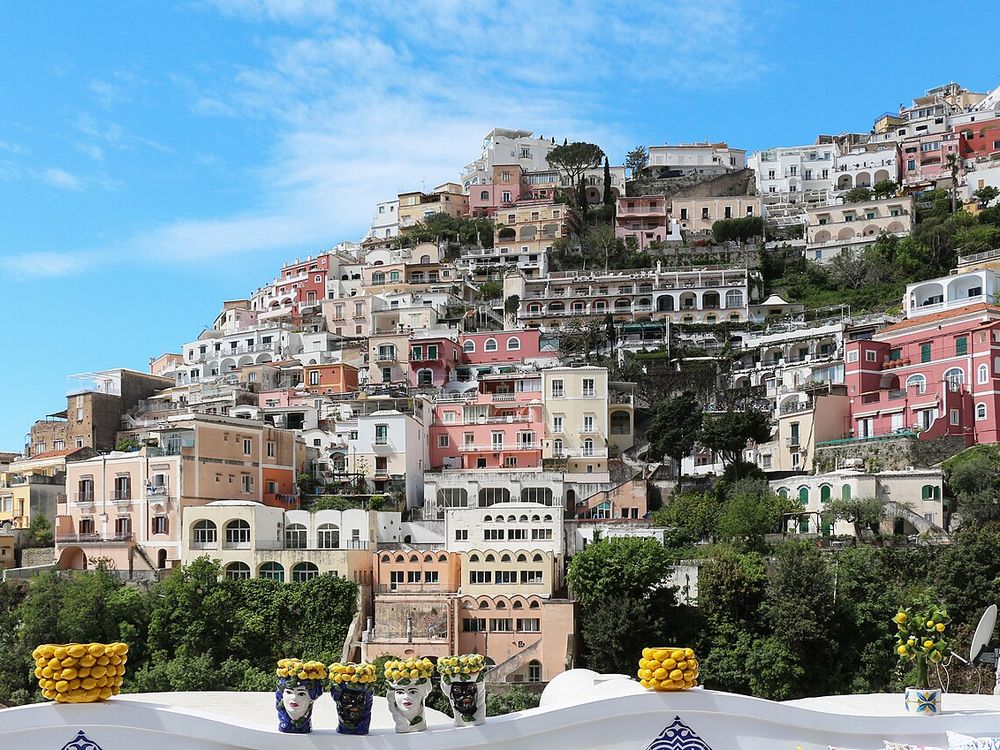
The Amalfi Coast. The coast road is a single lane each way on a cliff, with tunnels, blind bends and buses. Parking in Positano and Amalfi is scarce and expensive. Many people drop the car in Sorrento or Salerno and use the ferries and buses, which run on apps and timetables you want on the phone.
5 · Signal on the Autostrada and in the hill towns
On the Autostrada coverage is good for most of the way, with the breaks you would expect in the long tunnels through the Apennines and along the Ligurian coast. Load the route before a tunnelled stretch and the map carries on from where it was. Tolls are paid at the barrier by card, so no data needed there.
A driving day stays well under 1 GB unless the passengers stream video. On Ringo Light you get unlimited data at full speed for the length of the plan: 2 weeks for $14.99 or 30 days for $26.99, nothing that renews.
6 · Which Ringo plan, and what it costs
- The Italy plan, for a drive that stays in Italy: 2 weeks for $14.99 or 30 days for $26.99, nothing that renews. ringoesim.com/italy
- The Europe plan, if you cross into Switzerland (Lugano, a short drive from Lake Como, and the Bernina line from Tirano), Austria (Innsbruck, over the Brenner Pass from the Dolomites) and France (Nice and Monaco, along the coast from Liguria): 2 weeks for $22.99 or 30 days for $35.99, 33 countries. ringoesim.com/europe
- The Global plan, for longer than a month or a trip beyond Europe: $49.99 a month for 133 countries, renewing until you cancel.
Pay by card, Apple Pay or Google Pay and the eSIM arrives by email within seconds. Install it at home on Wi-Fi, switch its data on when you land, and turn Data Roaming on for it. If the trip is by train rather than by car, read eSIM for Interrail; to check that your phone takes an eSIM, see which phones support eSIM.