1 · The short answer
The Balearic Islands are part of Spain, so one Spanish plan covers them all. Ringo Light's Spain plan covers all four, Mallorca, Menorca, Ibiza and Formentera, on one eSIM, as a trip plan: unlimited data at full speed, 2 weeks for $14.99 or 30 days for $26.99, with nothing that renews. Install it at home, switch it on when you land in Palma, Mahón or Ibiza, and it carries on across every ferry hop.
What changes between the islands is not the network but the water: a crossing, a day on a boat, a cove under a cliff. And for visitors from the UK there is a trap that catches people every summer, on their own SIM, not the eSIM. Both are below.
2 · The islands against the plans
Read from our catalogue when this page is built:
Swipe to compare →
The Spain plan is the cheapest of the three for an island holiday. The Europe plan only earns its place if the trip goes on to France, Italy or further, and the Global plan if it goes beyond Europe.
3 · Island by island
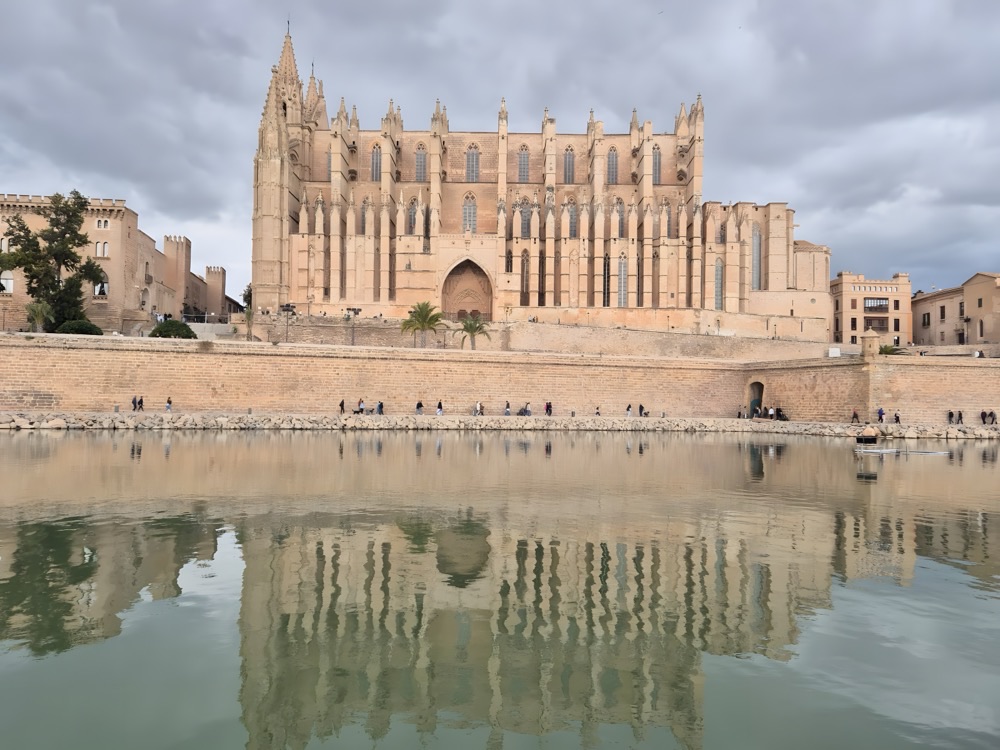
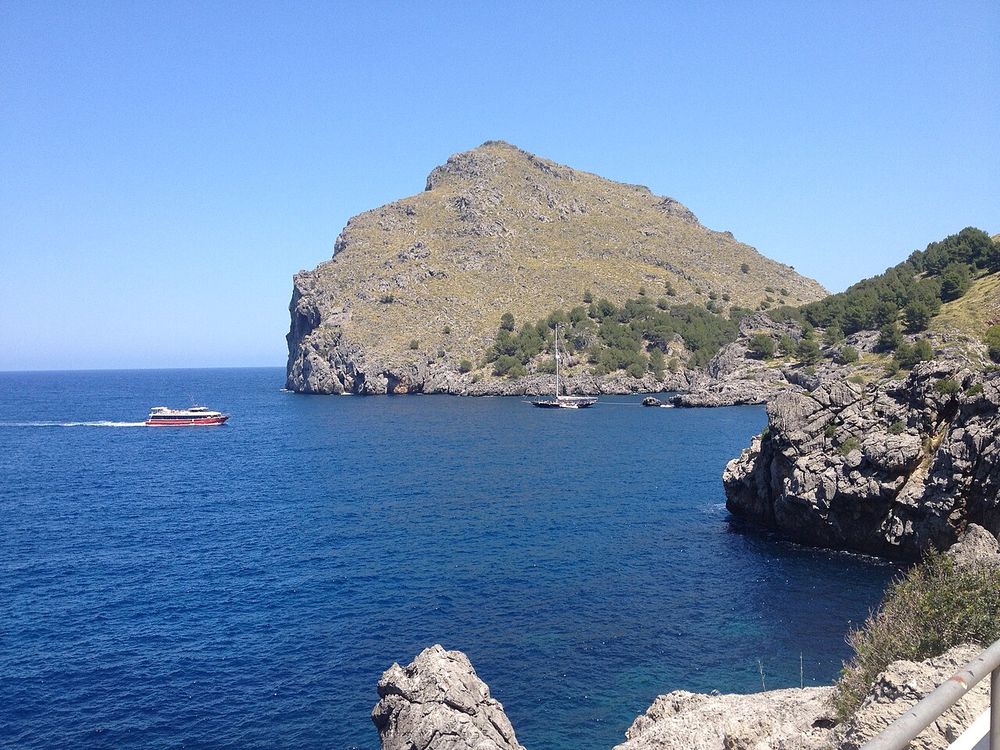
Mallorca. The biggest island and the busiest airport. Palma has full city coverage; the old town, the cathedral and the seafront are easy. The Serra de Tramuntana on the northwest coast is where the signal gets patchy, on the hairpin roads and in the deep coves. Load the map before the drive down to Sa Calobra.
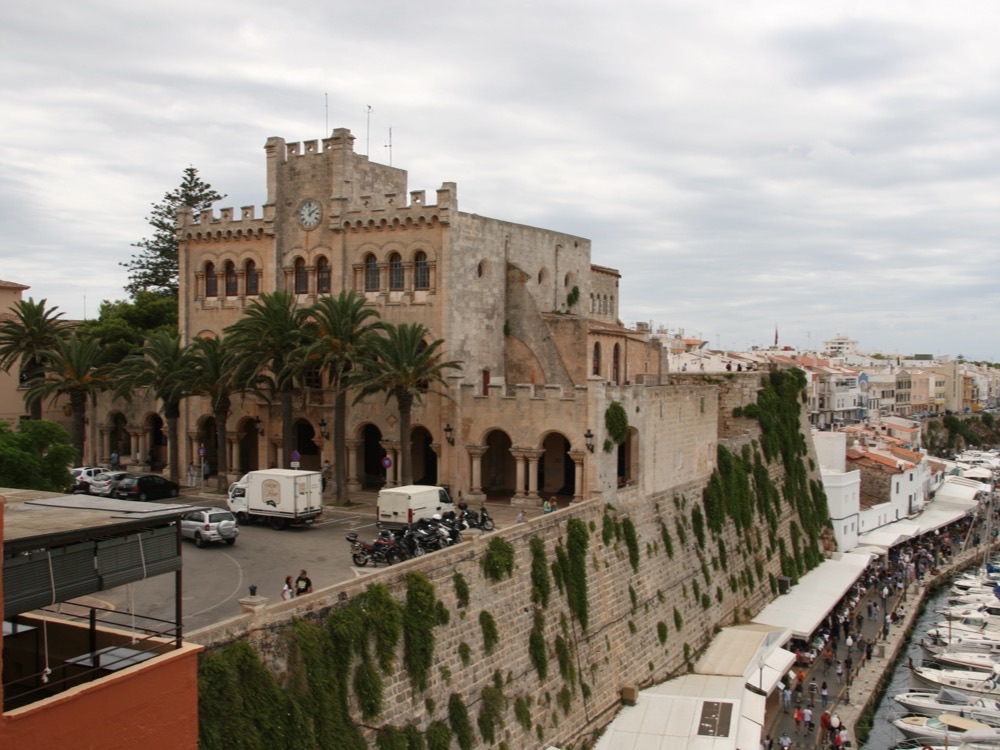
Menorca. Quieter, greener, and made for coves. Ciutadella in the west is the old capital and the ferry port for Mallorca; Mahón in the east has the airport. The famous beaches of the south coast, Macarella among them, are reached by a walk or a summer bus, and in some coves the signal fades with the cliffs.
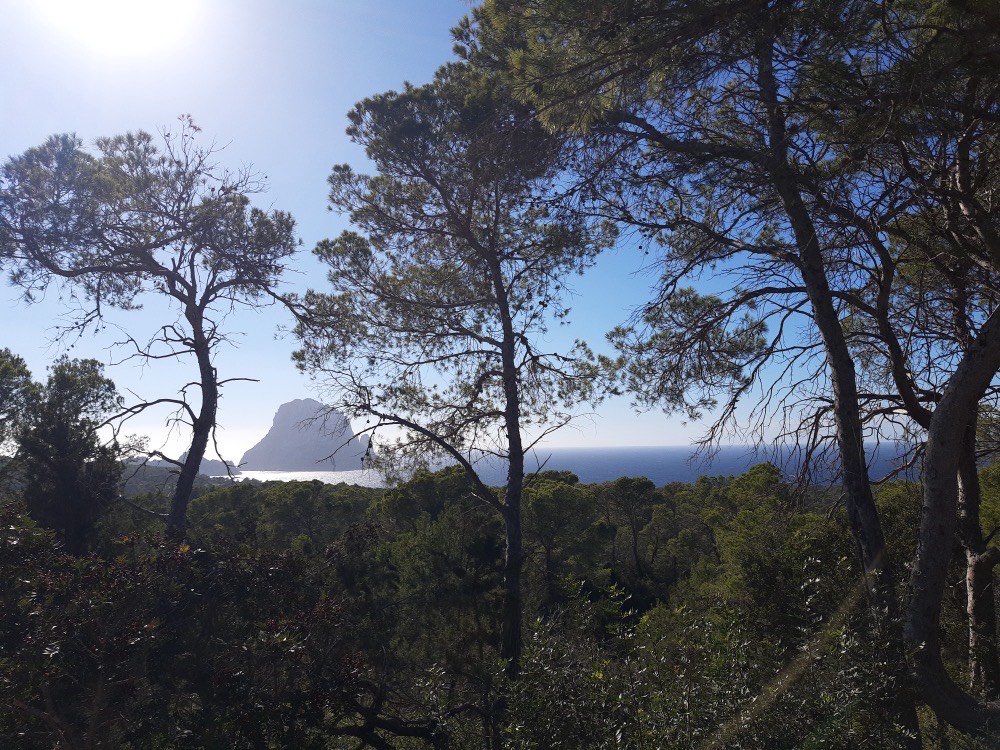
Ibiza. Ibiza town, San Antonio and the beaches between them are well covered. The southwest coast, with the rock of Es Vedrà offshore, is where people go for the sunset and where a working map helps on the small roads back in the dark.
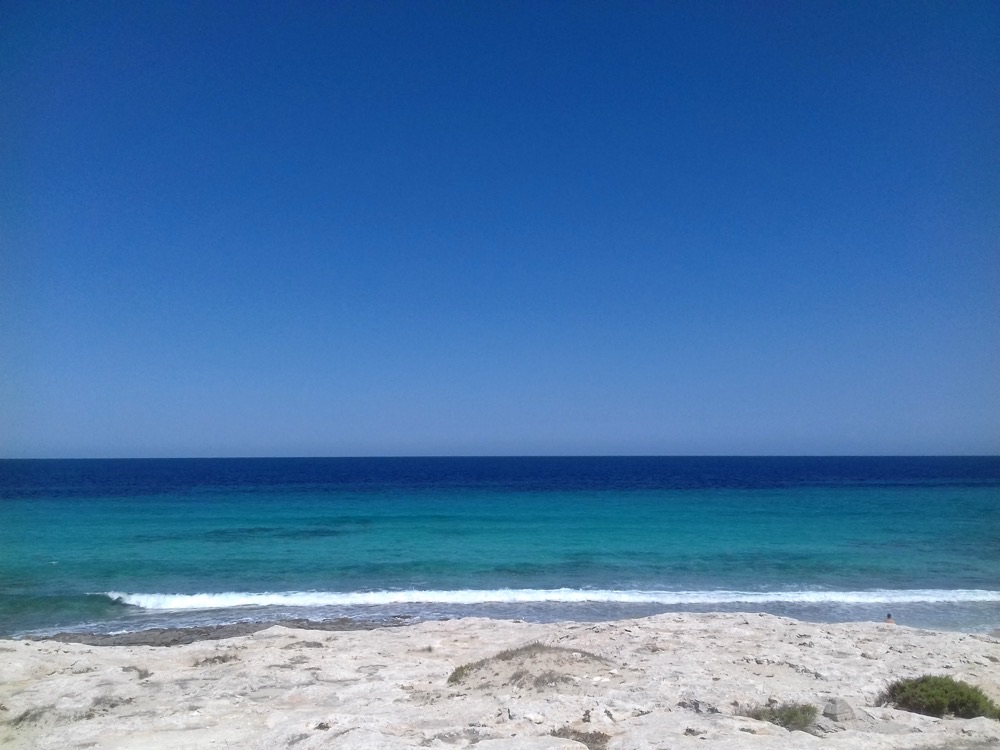
Formentera. No airport: you arrive by ferry from Ibiza town, a short crossing on the fast boats. The island is flat and small, mostly covered, and its beaches are the reason to come. Ses Illetes, on the northern spit, is the one in the photographs.
4 · Ferries, boat days and the signal at sea
Ferries link the islands to each other and to the mainland: Ibiza to Formentera many times a day, Alcúdia on Mallorca to Ciutadella on Menorca, Palma to Ibiza, and the overnight and fast boats from Barcelona, Valencia and Dénia. To your phone, a crossing is a coast, then open water, then a coast.
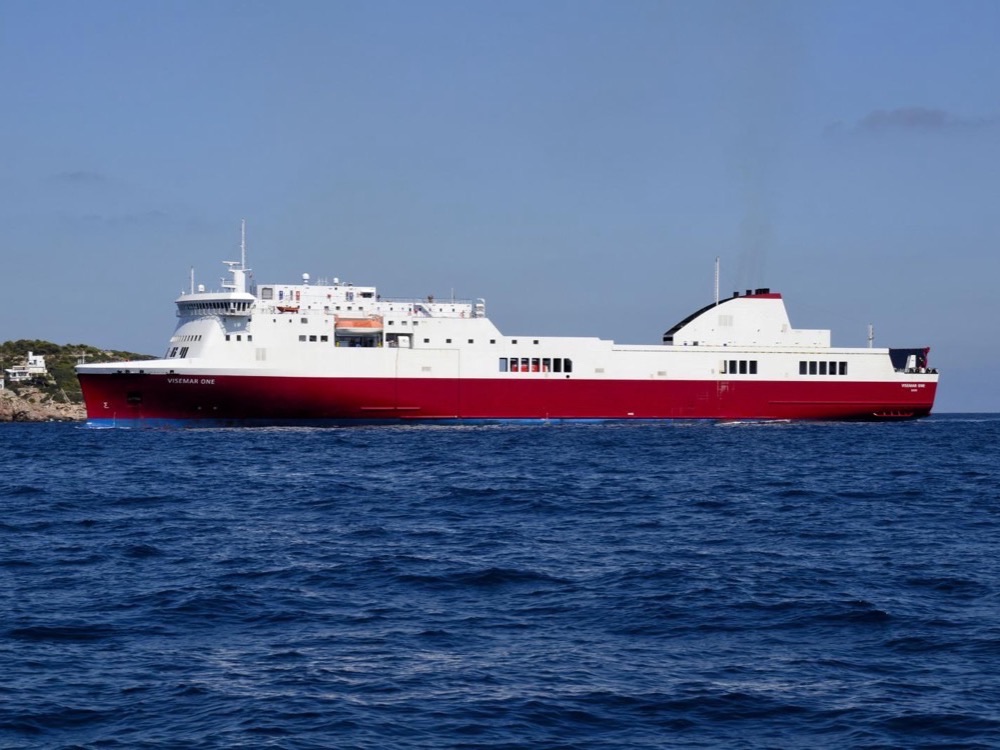
- Near the coast, the Spanish networks reach the boat, and the eSIM works as it does on land. The short hop to Formentera is mostly in sight of land.
- Mid channel, on the longer crossings, expect the signal to drop for part of the way. Download what you need before you board.
- A ship's own network. Some larger ferries carry a network at sea, which bills like roaming on most SIMs. Keep data roaming off on your own SIM once you are aboard.
- Boat days. A hired boat or a catamaran trip stays close enough to the coast for signal most of the time, but not in every cove under a cliff. Put the phone in a waterproof pouch and share your plan with someone on shore.
5 · The roaming trap for UK visitors
Before Brexit, EU rules meant a UK SIM roamed in Spain as if at home. Those rules no longer bind UK carriers, and many visitors still assume something like them protects them. Several UK carriers now charge a daily fee for using your plan in Spain, unless your plan includes Europe. The spending limit carriers apply to data abroad caps the bill when it hits; it does not make roaming free, and a week of daily fees adds up before it bites.
The clean way round it: keep your UK SIM in the phone for calls and texts with data roaming off, and let the eSIM carry the data. Your number stays reachable, and the only data bill is the one you paid before you flew. The settings are in our .
6 · Family trips with several phones
- One eSIM per phone. An eSIM installs on one phone and stays there. A family of four with four phones needs four plans: four 2-week Spain plans come to $59.96 in all.
- Check every phone first. Older phones, and some handed down to children, do not take an eSIM. Our and the thirty-second check settle it.
- Tablets can share. A tablet without its own line can join a parent's hotspot. It draws on that phone's data and battery, so it suits a film on the ferry better than a whole day.
- Install at home. Do every phone on the home Wi-Fi the evening before, not at the airport with a queue behind you.
7 · What two weeks of unlimited data costs in Spain
Priced on the same day, 27 September 2026, for two weeks of unlimited data in Spain, islands included. The rivals sell 15 days; Ringo Light sells 2 weeks.
Swipe to compare →
The cheapest other brand was Ubigi, at $34.00. Every brand and the fine print are in .
8 · Which Ringo plan, and what it costs
Ringo Light is our own data eSIM, sold to fund the full Ringo, one plan that works everywhere with your own number ported onto it. Installed once, next to your own SIM. Your number stays on your own line for calls and messages; the eSIM carries the data.
- The Spain plan, for the islands and the mainland: 2 weeks for $14.99 or 30 days for $26.99, nothing that renews.
- The Europe plan, if the holiday runs on into the rest of Europe: 2 weeks for $22.99 or 30 days for $35.99.
- The Global plan, for travel beyond Europe: $49.99 a month for 133 countries, renewing until you cancel.
On Ringo Light you get unlimited data at full speed for the length of the plan: 2 weeks for $14.99 or 30 days for $26.99, nothing that renews.
The step-by-step is in our and .