1 · The short answer
Buy one regional eSIM before you fly, install it on Wi-Fi at home, and cross every border on the loop without touching your phone settings again. Ringo Light's Asia plan covers Thailand, Vietnam, Cambodia and Indonesia on one eSIM, 20 countries in all, as a trip plan: unlimited data at full speed, 2 weeks for $34.99, 30 days for $59.99 or 90 days for $73.99, with nothing that renews.
Laos is not on the Asia plan today, and we would rather say so than let you find out in Vientiane. Laos has its own trip plan, 2 weeks for $37.99 or 30 days for $63.99. The Global plan covers Laos along with the rest of the route.
For a loop longer than a month, or one that keeps going after Bali, the Global plan is the simpler buy: $49.99 a month for 133 countries, renewing until you cancel. The card to buy either is below this article.
2 · The loop, and what your phone does at each stop
Most people ride it clockwise from Bangkok and fly out of Bali. Here is the route as the phone sees it.
Bangkok. You land, airplane mode goes off, and the eSIM you installed at home registers on a Thai network before you reach passport control. Grab from the airport, the BTS map, the hostel's pin: all on data, no kiosk queue. Khao San is louder than you expect and the pad thai cart outside the 7-Eleven is better than the one with the sign.
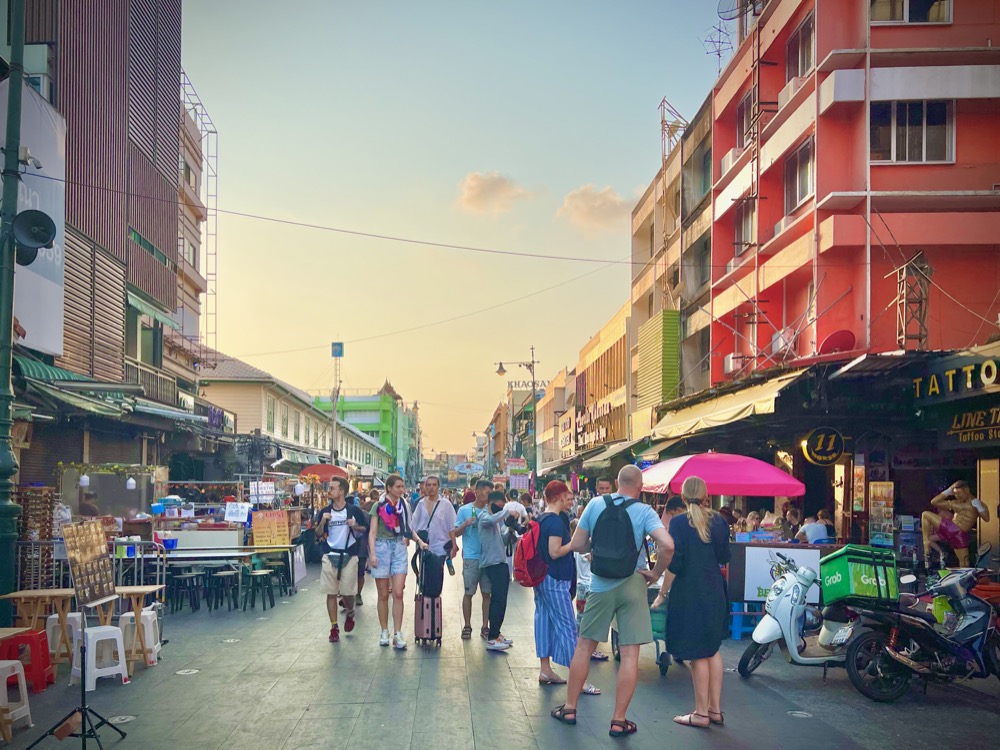

North to Chiang Mai, then across to Laos. The night train north is twelve hours of good sleep. From Chiang Rai or Huay Xai the slow boat down the Mekong takes two days to Luang Prabang. At the Lao border the phone is where honesty about plans matters: if Laos is not on your regional plan, this is the stretch where you want to have bought the right thing.


Hanoi and Ha Long Bay. Fly or take the long bus from Luang Prabang. Hanoi's Old Quarter is best crossed on foot with maps open; the Grab motorbike taxis want data and a pin. Ha Long is an overnight boat, and the signal on the water comes and goes whatever SIM you carry.
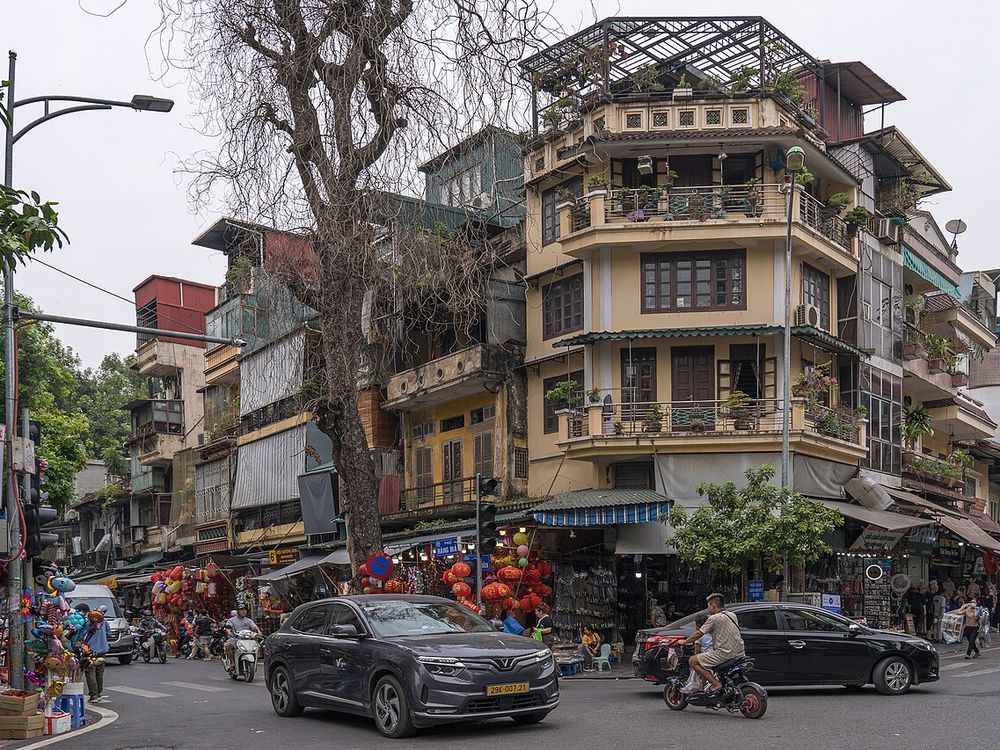

Down the coast to Hoi An and Saigon, then Cambodia. The Reunification Express runs the length of Vietnam and sleeper berths sell out, so book on data a few days ahead. The Moc Bai border into Cambodia is a bus stop: everybody off, passports, everybody on. A regional eSIM re-registers on the other side while you are still finding your seat.

Fly to Bali. From Siem Reap or Phnom Penh it is one hop via Kuala Lumpur or Bangkok. Bali runs on Gojek and Grab, both of which want a working data line the moment you leave the terminal.


3 · What happens to your phone at a border
Three ways to stay connected, and what each asks of you at the five borders on the loop.
Swipe to compare →
Local SIMs in Thailand, Vietnam and Cambodia are registered against a passport by law, which is why the shop takes a photo of you and your passport page, and why the airport counters have queues. They are cheap and the networks are good; the cost is the hour at each border and a new number each time, which breaks WhatsApp verification, bank codes and every booking confirmation sent to the old one.
With a regional eSIM the handover is automatic: the profile is allowed on a partner network in the next country and the phone finds it on its own. If it takes more than a couple of minutes, toggle airplane mode. If it still sulks, open the eSIM's network settings, switch automatic selection off, pick a network by hand, then put automatic back on.
4 · How much data a day on the road
Backpackers use less data than they fear and more than they plan for, because the heavy use happens in bursts: an evening of uploading, a video call home from a hostel with bad Wi-Fi.
Swipe to compare →
A normal travelling day sits under 1 GB. Posting video every day pushes it to 2 GB or more. Hostel Wi-Fi in the region is mostly fine for the heavy evening work, and patchy on the islands. On Ringo Light you get unlimited data at full speed for the length of the plan: 2 weeks for $34.99, 30 days for $59.99 or 90 days for $73.99, nothing that renews.
5 · Which Ringo plan, and what it costs
Ringo Light is our own data eSIM, sold to fund the full Ringo, one plan that works everywhere with your own number ported onto it. Installed once, next to your own SIM. Your number stays on your own line for calls and messages; the eSIM carries the data.
- The Asia plan, for a loop of up to a month through Thailand, Vietnam, Cambodia and Indonesia: unlimited data at full speed, 2 weeks for $34.99, 30 days for $59.99 or 90 days for $73.99, nothing that renews. 20 countries on one eSIM.
- The Laos plan, for the Lao leg if you take it: unlimited data at full speed, 2 weeks for $37.99 or 30 days for $63.99.
- The Global plan, for the trip that does not end at Bali: $49.99 a month for 133 countries, renewing until you cancel, so the same eSIM carries on to Australia or back through India.
Pay by card, Apple Pay or Google Pay and the eSIM arrives by email within seconds. Install it at home on Wi-Fi, switch its data on when you land in Bangkok, and turn Data Roaming on for it; that toggle is how a travel eSIM connects.
6 · Six small things that save a trip
- Download offline maps of each city before the bus. Signal is fine in towns and thin between them.
- Keep your own SIM switched on for calls and texts and its data roaming off. Bank codes keep arriving; the roaming bill does not.
- Screenshot every booking. The QR for the boat and the hostel address load with no signal at all.
- Do not delete the eSIM between countries. It installs once. Switch it off if you want; never remove it.
- A power bank matters more than a second SIM. Maps and Grab drain a phone by mid-afternoon in the heat.
- Border days are long. Charge the night before, keep a photo of your passport page, and let the phone find the new network on its own while you queue.